 Skip to content
A mobility routine calculator may suggest a sequence or estimate time for movement, but it cannot diagnose stiffness, assess a joint, or know your injury history. Mobility describes how comfortably and actively a joint moves through a range. It varies among people and can be influenced by activity, recovery, health, and the specific movement being tested.
Build a simple routine
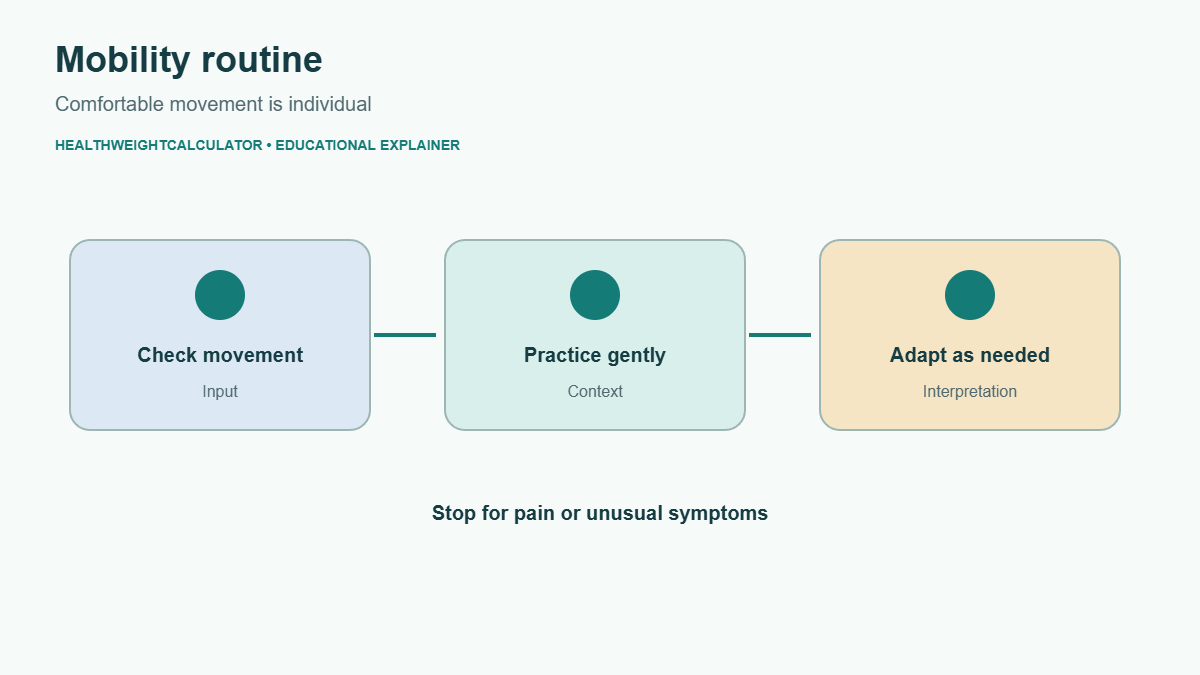
Start with movements that feel controlled and comfortable. Use a gentle range rather than forcing a position, and breathe normally. You might choose a few movements for areas involved in your daily activities or sport, then repeat them consistently. There is no single routine that is right for everyone, and a calculator’s list is not a personalized treatment program.
Track change without overinterpreting it
If you record range of motion, use the same position and method each time. Warm-up, time of day, and measurement technique can affect a reading. Small differences do not necessarily mean a lasting change. Stop for sharp pain, numbness, tingling, or unusual symptoms. If movement is limited after an injury or pain persists, a clinician or physical therapist can help assess it.
General adult activity guidelines include aerobic and muscle-strengthening activity, but a mobility calculator cannot determine what is safe for your personal condition. Choose activities appropriate to your ability and seek individualized guidance when needed. For general adult activity recommendations, see the CDC activity guide and consult trusted health advice rather than forcing a target range.
Common questions
Does mobility mean flexibility?
The terms overlap in everyday use, but mobility often emphasizes controlled movement at a joint.
Should a stretch feel painful?
No. Stop if it causes sharp or unusual pain.
Can an online routine fix an injury?
No. Persistent symptoms or injury need appropriate professional assessment.
Sources
Educational information only; not physiotherapy or individualized medical advice.
