 Skip to content
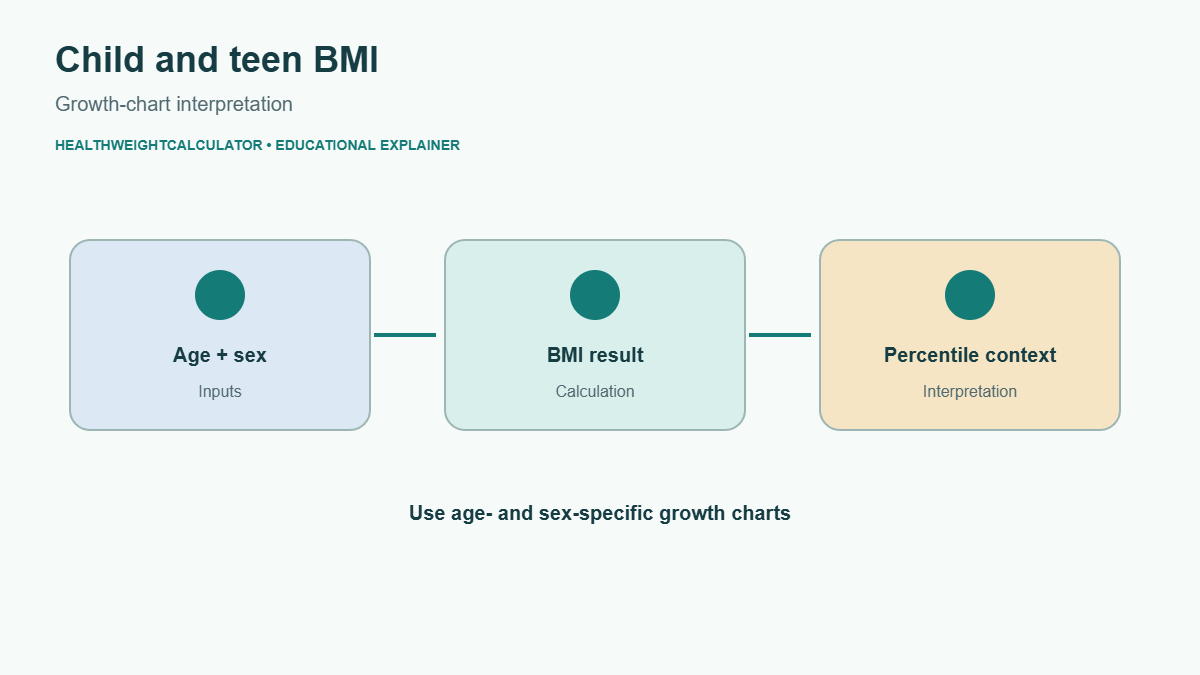
A pediatric growth BMI calculator is different from an adult BMI calculator. For children and teens, BMI is interpreted using age- and sex-specific growth charts because body composition changes as a child grows. The result is generally considered as a percentile relative to a reference population—not by applying adult BMI categories.
How to interpret the estimate
A calculator needs accurate height, weight, age, and the inputs requested by its growth-chart method. A small measurement or age-entry error can shift the result, so use reliable measurements and the tool’s stated units. A percentile describes how a measurement compares with the chart reference; it does not diagnose a health condition or explain why a child is growing a certain way.
Why a clinician should interpret concerns
Growth patterns over time can matter more than one reading. A healthcare professional can review measurements, development, medical history, family context, and any concerns about eating or activity. Do not put a child on a restrictive diet or make treatment decisions from an online percentile. If a result worries you, discuss it with the child’s clinician.
The CDC provides a BMI calculator for children and teens and guidance on interpretation. The CDC also explains that BMI is a screening measure, not a direct measurement of body fat. Our adult waist-to-height guide covers a different tool and is not intended to replace pediatric growth-chart assessment.
Common questions
Can I use adult BMI categories for a child?
No. Pediatric BMI is interpreted with age- and sex-specific growth charts.
Does one percentile diagnose a problem?
No. It is a screening result that needs context and professional interpretation.
Should a child change diet based on this calculator?
No. Discuss growth and nutrition concerns with the child’s healthcare professional.
Sources
Educational information only; not a diagnosis or substitute for pediatric care.

Pingback: Weight-for-Height Percentile Calculator: Growth Chart Context