 Skip to content
A healthy fat intake calculator may estimate grams of dietary fat from a calorie target or percentage. That arithmetic can be useful for understanding a label, but a single number does not describe the quality of an overall eating pattern or establish what is right for an individual.
Total fat and type of fat both matter
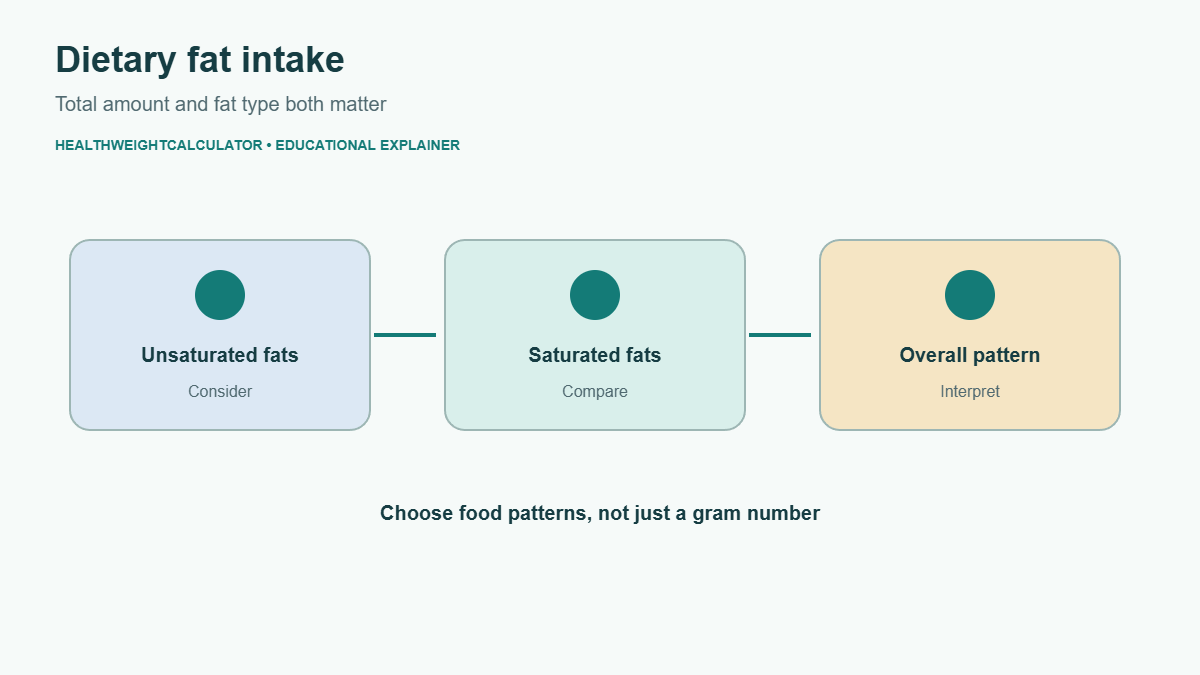
Dietary fat provides energy and helps the body absorb certain vitamins. Foods contain different types of fat, and the overall food pattern matters. Public-health guidance generally encourages replacing some sources of saturated fat with unsaturated fats rather than focusing only on total grams. The specific advice can depend on age, health, and dietary needs.
How to read the estimate
Check whether a calculator uses total calories, a percentage range, or a fixed target, and whether values are grams or energy. Food labels can help compare products, but portion size affects the amount consumed. A calculator cannot evaluate nutrient adequacy, medical needs, or interactions with a prescribed diet.
The World Health Organization’s healthy-diet guidance discusses unsaturated and saturated fats within an overall diet. If you have a condition that affects nutrition or are following a therapeutic diet, consult your healthcare professional or registered dietitian before making major changes. Our low-carb guide offers a similar reminder that macro targets vary by method and person.
Common questions
Is all dietary fat unhealthy?
No. Fat is a normal nutrient; types and food sources differ.
Does a calculator set my exact target?
No. It provides an estimate based on inputs and assumptions.
Should I cut fat to lose weight?
Do not make restrictive changes based only on a calculator; discuss personal needs with a qualified professional.
Sources
Educational information only; not individualized nutrition advice.
