 Skip to content
A ketogenic diet macro calculator estimates daily carbohydrate, protein, and fat targets from a selected plan and personal inputs. The result depends on the calculator’s assumptions and the definition of a ketogenic diet it uses. It is not a universal prescription, and it cannot determine whether this eating pattern is appropriate for a particular person.
Know which method the calculator uses
Some tools set a carbohydrate limit and divide remaining energy between fat and protein. Other tools use different formulas, activity factors, or calorie goals. Check whether the calculator counts total or “net” carbohydrates and how it treats fiber and sugar alcohols. Compare results only when the methods and units match.
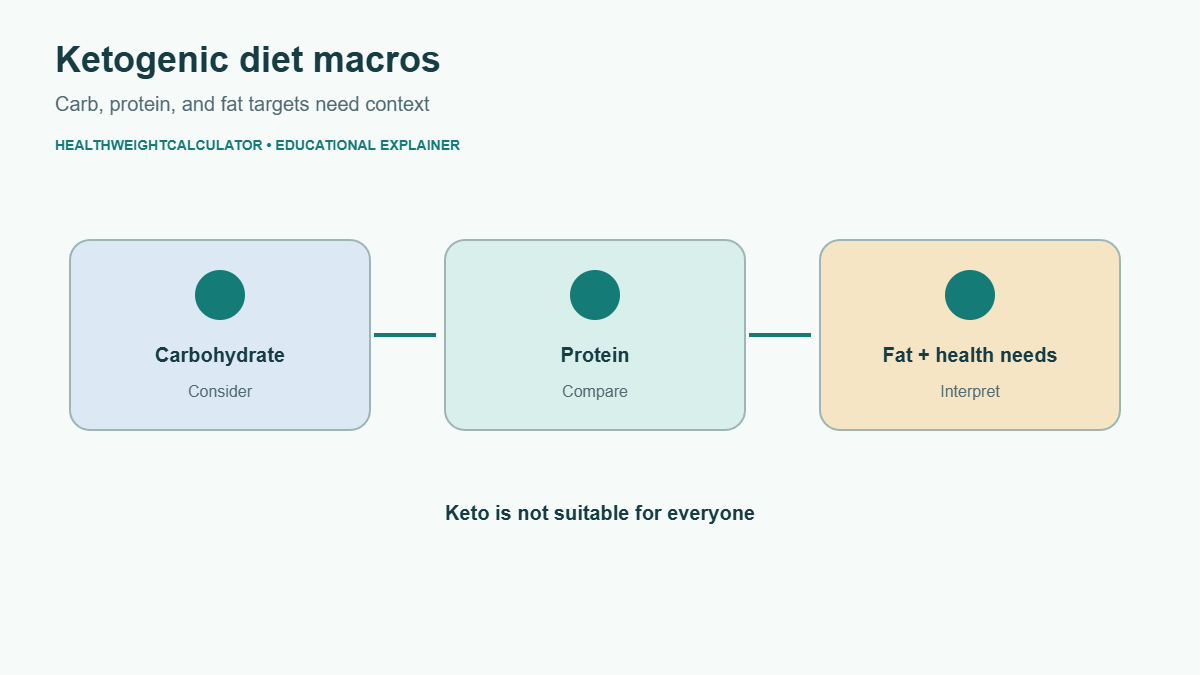
Consider safety and sustainability
A restrictive diet may not suit everyone. If you have diabetes and use insulin or medicines that can cause low blood glucose, changing carbohydrate intake can affect treatment; consult your healthcare team before making changes. People who are pregnant, breastfeeding, under 18, or managing kidney, liver, or other health conditions should seek professional advice before starting a restrictive plan.
Food quality and nutrient adequacy matter alongside macronutrient percentages. The NIDDK provides general information about diabetes eating patterns and emphasizes individualized management. A registered dietitian can help evaluate whether a plan fits your needs. Our low-carb calculator guide explains why carb definitions and targets vary.
Common questions
Is there one correct keto macro split?
No. Calculator methods and individual needs differ.
Can I change my diabetes medicine to match the result?
No. Discuss diet changes with your healthcare team; do not adjust medication on your own.
Does a keto score prove the diet is safe?
No. A calculator cannot assess medical suitability.
Sources
Educational information only; not a diet prescription or medication adjustment.

Pingback: Keto Carb Limit Calculator | Health Weight Calculator