 Skip to content
A plant-based nutrition calculator may estimate calories or macronutrients, but it cannot determine whether an individual diet provides all needed nutrients. “Plant-based” can mean different things, from meals centered on plants that include some animal foods to fully vegan eating. The right plan depends on food choices, life stage, health, and access.
Build variety across foods
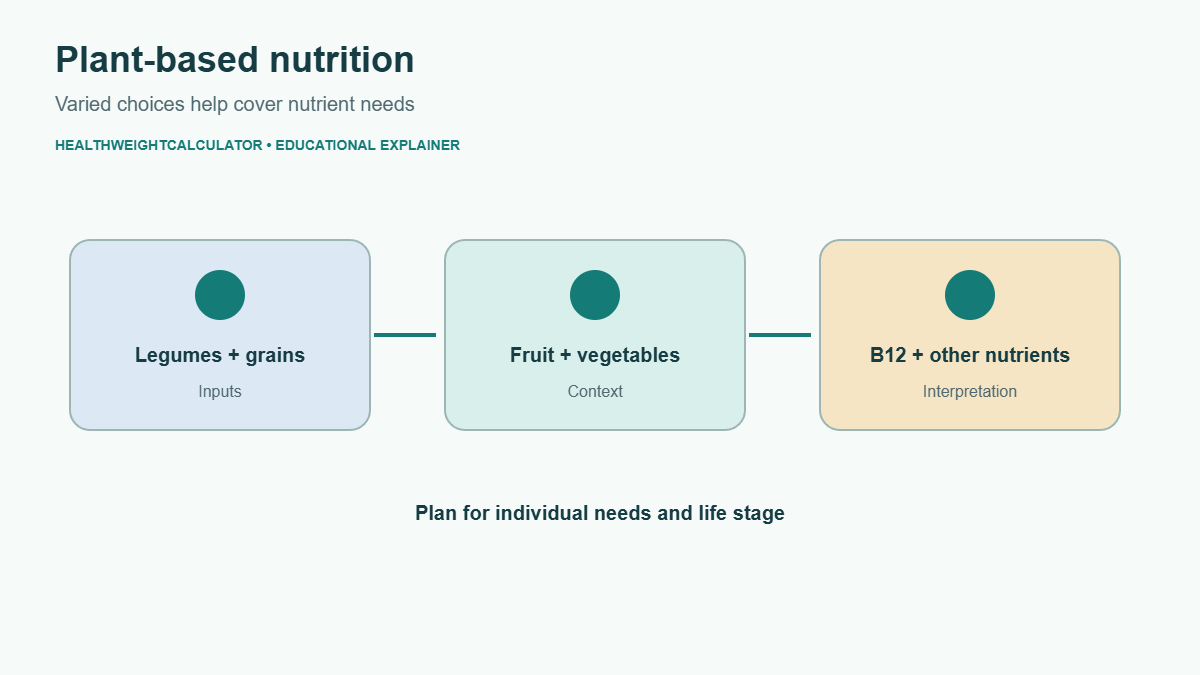
Beans, lentils, peas, soy foods, nuts, seeds, whole grains, vegetables, and fruit can contribute different nutrients. Combining varied foods over time can make it easier to meet nutrition needs. A calculator’s protein or calorie total does not show the full picture, such as food quality, iron absorption, calcium, iodine, or individual medical needs.
Pay attention to vitamin B12
Vitamin B12 is naturally found in animal-derived foods; people following vegan diets need a reliable fortified food or supplement source. The appropriate approach depends on the individual. Other nutrients may also need attention depending on food choices and life stage. Do not rely on a quiz or calculator to diagnose a deficiency or prescribe supplements.
The NIH Office of Dietary Supplements provides an evidence-based vitamin B12 fact sheet. People who are pregnant, breastfeeding, under 18, managing a medical condition, or planning a restrictive diet should seek professional guidance. A registered dietitian can help evaluate whether a plan is adequate. Our calculator collection offers general tools, not personalized nutrition assessment.
Common questions
Does plant-based always mean vegan?
No. The term is used for different eating patterns.
Do vegans need to consider B12?
Yes. A reliable source such as fortified foods or supplements should be planned with appropriate guidance.
Can a calculator confirm a nutrient deficiency?
No. It does not measure nutrient levels or diagnose a condition.
Sources
Educational information only; not a personalized diet or supplement prescription.
Visual recap transcript
A plant-based nutrition calculator may estimate calories or macronutrients, but it cannot determine whether an individual diet provides all needed nutrients. “Plant-based” can mean different things, from meals centered on plants that include some animal foods to fully vegan eating. The right plan depends on food choices, life stage, health, and access.
Plant-based nutrition infographic showing legumes and grains, fruit and vegetables, and attention to vitamin B12 and other nutrients.
No. The term is used for different eating patterns.
