 Skip to content
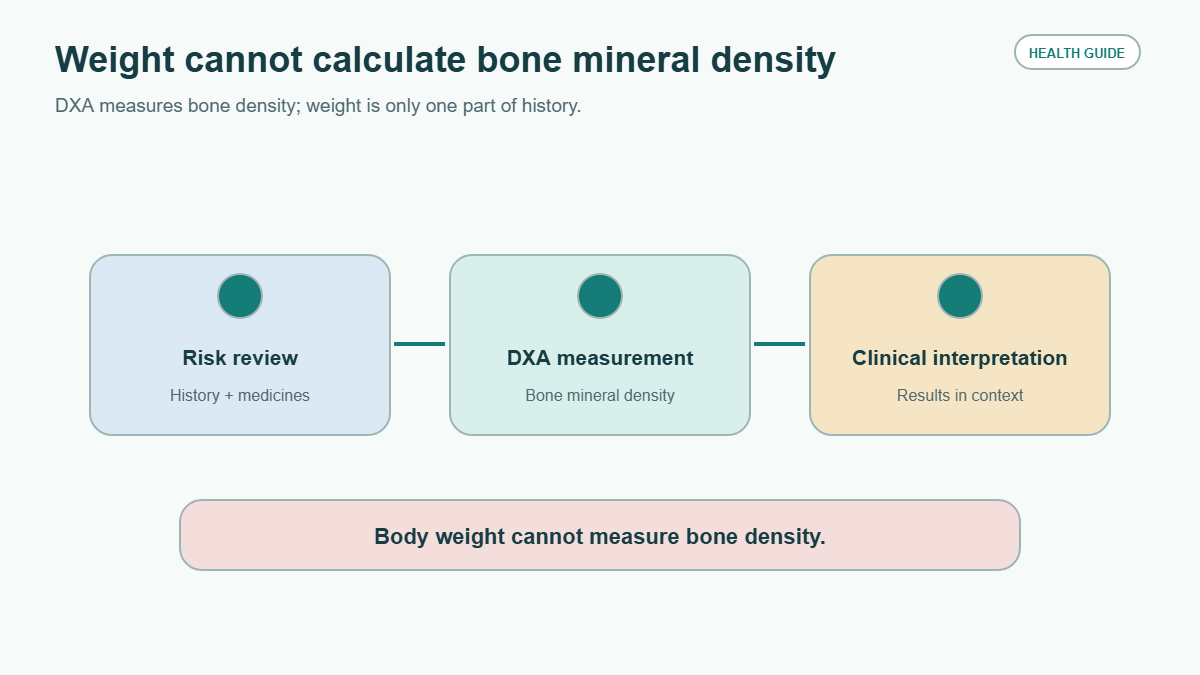
A bone density weight calculator cannot determine the strength or mineral density of your bones from body weight. Weight alone cannot tell whether someone has osteoporosis or predict an individual fracture. A number may be a reason to ask a question, but it is not a substitute for an appropriate clinical assessment.
How bone density is assessed
Healthcare professionals consider factors such as age, prior fractures, family history, medical conditions, and medicines. When testing is appropriate, dual-energy X-ray absorptiometry (DXA) is commonly used to measure bone mineral density, often at the hip and spine. The National Institute of Arthritis and Musculoskeletal and Skin Diseases explains how clinicians use bone-density testing and other information to assess osteoporosis.
Why weight-only predictions can mislead
Bone health is influenced by more than body size. A calculator that claims to estimate bone density from height and weight would be suggesting a measurement it did not actually take. Even a DXA result needs context; a clinician interprets it alongside the person’s age, history, and reason for testing.
If you have had a fracture, use medicines that may affect bone, or have concerns about osteoporosis, discuss them with a healthcare professional. Ask whether screening or testing is appropriate for you. Do not start or stop medication or supplements based on an online score.
Our calculator collection provides general tools; it does not measure bones. For more information, read the NIAMS overview of osteoporosis.
Common questions
Can BMI show my bone density?
No. BMI relates weight to height; it does not measure bone mineral density.
Is DXA the same as a weight calculator?
No. DXA is a clinical imaging test that measures bone density at specific sites.
Should everyone get a bone-density scan?
Testing depends on age, risk factors, history, and screening guidance. Ask a healthcare professional about your situation.
Sources
Educational information only; not a bone-density result, diagnosis, or treatment plan.
