 Skip to content
A BMI calculator cannot tell you your LDL, HDL, or triglyceride levels. Those values come from a blood test and need to be considered with other health information.
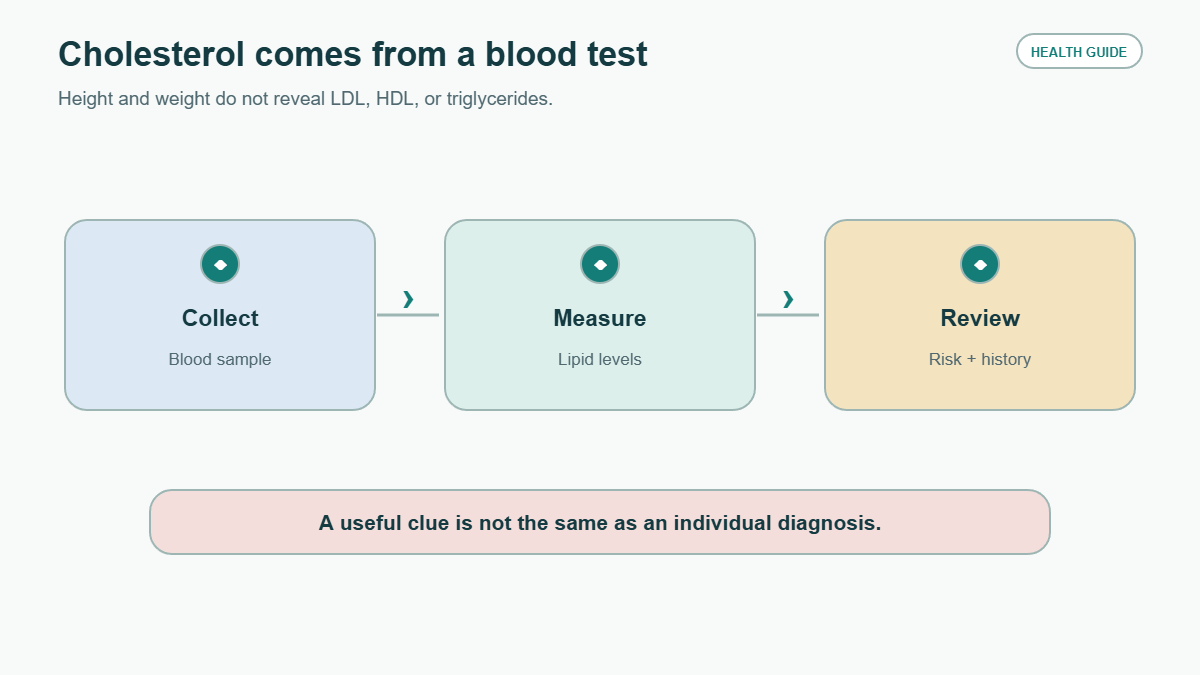
How BMI and cholesterol differ
BMI relates weight to height and does not directly measure body fat or blood lipids. NHLBI lists overweight and obesity among many factors that can affect cholesterol, along with diet, physical activity, smoking, alcohol, family history, some medical conditions, and certain medicines. A BMI result cannot determine which factors apply to you or calculate your lipid levels.
A lipid panel measures blood fats such as cholesterol and triglycerides. A healthcare professional can explain the values alongside your health history and other risk factors. For more information, read NHLBI’s causes of high blood cholesterol and the CDC’s overview of BMI.
Why this page does not provide a cholesterol score
Entering height and weight cannot substitute for laboratory testing. This article does not calculate LDL, HDL, triglycerides, diagnose high cholesterol, or recommend medication. If you are unsure whether you need testing or how to interpret results, contact a healthcare professional.
Use our tools and calculators for general estimates, and read the weight-management guide for general context. Neither can tell you your blood cholesterol.
Short video: BMI versus a lipid panel
Frequently asked questions
Can BMI estimate my cholesterol?
No. A BMI calculator does not measure cholesterol or triglycerides.
Does weight affect cholesterol?
It may be one factor, but NHLBI lists multiple lifestyle, medical, genetic, and medication-related contributors.
How do I find my cholesterol levels?
Ask a healthcare professional whether a lipid blood test is appropriate and how to interpret the results.
Sources
For education only; not a lab result, diagnosis, or personalized medical advice.
