 Skip to content
An elderly nutrition needs calculator can estimate requirements, but it cannot detect every reason an older adult may struggle to eat enough. Appetite, illness, medicines, dental health, swallowing, mobility, memory, and food access can matter as much as the calorie equation.
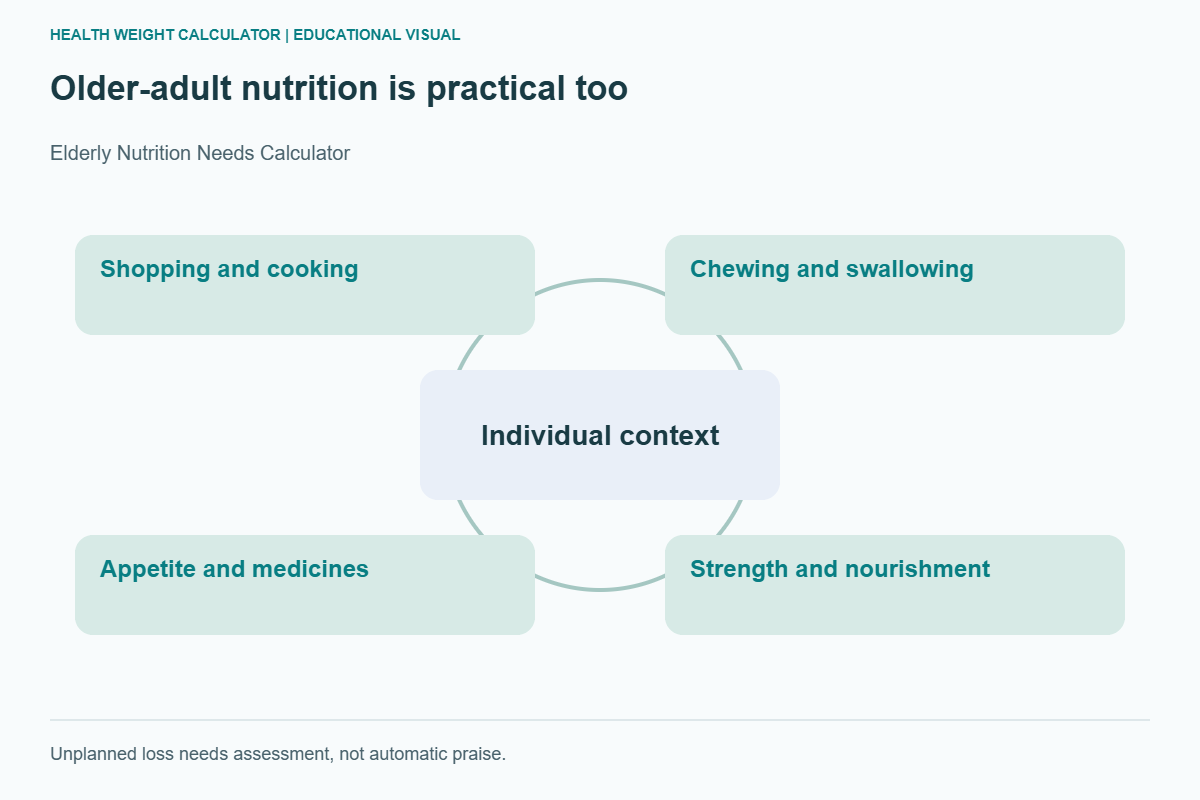
Start with the practical assessment
Ask whether shopping, cooking, opening packages, chewing, or swallowing has become difficult. Check for unplanned weight change and whether meals are regularly missed. Do not assume that a smaller appetite is harmless or that weight loss is always desirable.
Interpret numerical targets carefully
Energy and protein recommendations depend on body size, health, activity, and clinical circumstances. Kidney disease and other conditions may alter advice. A general high-protein slogan should not replace a prescribed nutrition plan.
Hydration and micronutrients also matter, but fluid restrictions, medicines, and medical needs can change appropriate guidance. A single calorie total cannot establish adequacy.
Make eating easier
- Use suitable convenient foods or meal support.
- Adapt textures only with appropriate guidance when swallowing is a concern.
- Include enjoyable, culturally familiar foods.
- Arrange help with shopping, preparation, or social isolation.
Qualified assessment may identify a need for nutrition support, medical treatment, dental care, or practical assistance. Those needs cannot be solved by repeatedly lowering an app’s goal.
Questions
Should all older adults aim to lose weight?
No. Maintaining nourishment, strength, and function may be the priority.
Can a supplement replace meals automatically?
No. Oral nutrition products may have a role in an individualized plan, but suitability and monitoring should be discussed with a professional.
Sources and further reading
- MedlinePlus: Nutrition for Older Adults
- NIH ODS: Dietary Reference Intakes and Nutrient Recommendations
- FDA: Understanding the Nutrition Facts Label
- NIDDK: Eating and Physical Activity
Related reading: older-adult BMI context. Educational information, not a diagnosis or personalized nutrition prescription.
Short visual recap
Visual recap transcript
An elderly nutrition needs calculator can estimate requirements, but it cannot detect every reason an older adult may struggle to eat enough. Appetite, illness, medicines, dental health, swallowing, mobility, memory, and food access can matter as much as the calorie equation.
Older-adult nutrition is practical too. Shopping and cooking; Chewing and swallowing; Appetite and medicines; Strength and nourishment. Unplanned loss needs assessment, not automatic praise.
No. Maintaining nourishment, strength, and function may be the priority.
