 Skip to content
Emotional eating means food sometimes responds to feelings as well as hunger. That does not make someone weak or mean every comforting meal is a problem. The useful question is whether the pattern causes distress, feels out of control, or interferes with health and daily life.
Notice the context without policing food
If it feels safe, briefly note what happened before a difficult episode: a missed meal, conflict, tiredness, loneliness, or lack of convenient food. The aim is to identify needs, not count failures. Detailed food tracking is not necessary if it increases anxiety.
Protect regular nourishment
Skipping meals to compensate can intensify hunger and make the next evening harder. Plan accessible meals and snacks appropriate to your needs. Permission to eat adequately is compatible with seeking help for distressing patterns.
Build more than one coping option
- Contact a supportive person or arrange practical help.
- Take a short restorative break or use a calming routine you find helpful.
- Address predictable barriers such as an unavailable lunch or exhausting schedule.
- Keep enjoyable foods in perspective rather than labelling them forbidden.
Food can provide pleasure and connection. The goal is not to eliminate emotional meaning from eating, but to expand support when food becomes the only available coping strategy.
When professional support matters
Recurrent loss of control, secrecy, compensatory behaviours, severe restriction, or significant distress warrants assessment by a qualified professional. A weight-loss calculator cannot diagnose or treat an eating disorder. Support is appropriate at any body size.
Questions
Should I exercise to make up for an episode?
No. Punishment can reinforce the cycle. Return to regular care and seek help when needed.
Does emotional eating mean weight loss should be the first goal?
Not necessarily. Stabilizing eating and wellbeing may be the more appropriate priority.
Sources and further reading
Related reading: mental health and weight context. Educational information, not a diagnosis or personalized treatment plan.
Short visual recap
Visual recap transcript
Emotional eating means food sometimes responds to feelings as well as hunger. That does not make someone weak or mean every comforting meal is a problem. The useful question is whether the pattern causes distress, feels out of control, or interferes with health and daily life.
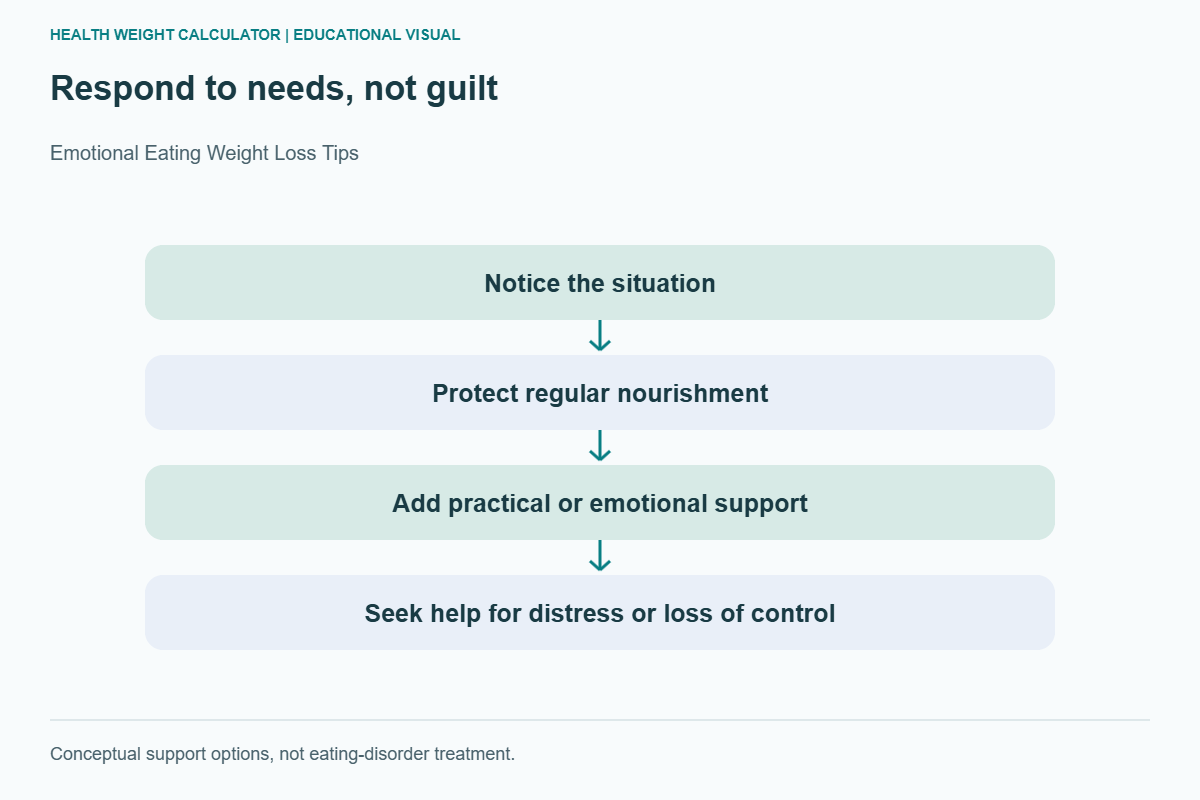
Respond to needs, not guilt. Notice the situation then Protect regular nourishment then Add practical or emotional support then Seek help for distress or loss of control. Conceptual support options, not eating-disorder treatment.
No. Punishment can reinforce the cycle. Return to regular care and seek help when needed.
