 Skip to content
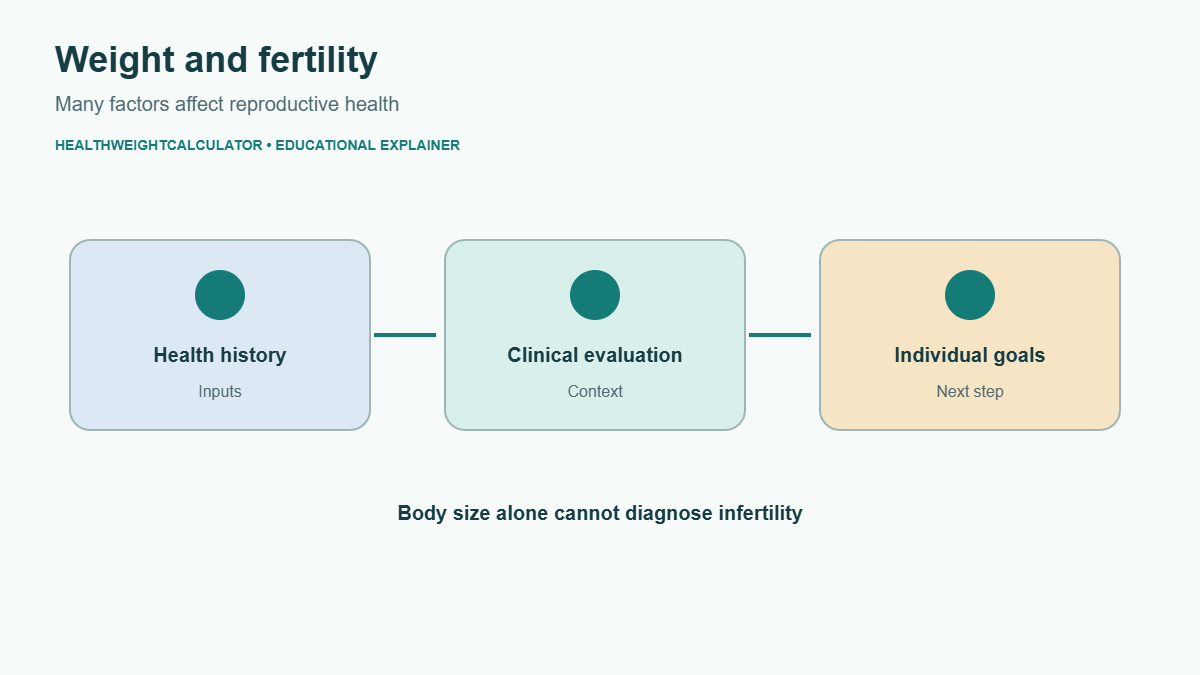
A fertility weight impact calculator cannot diagnose infertility or predict whether an individual will become pregnant. Reproductive health is influenced by many factors, and body weight is only one part of a person’s overall health history. A number from a calculator cannot identify the cause of difficulty conceiving or recommend a treatment plan.
Why one measurement is not a fertility test
Fertility concerns can involve ovulation, age, reproductive anatomy, sperm factors, medical conditions, medicines, and other circumstances. A BMI or weight estimate cannot assess those factors. Even when a clinician considers weight as part of care, the advice depends on the individual’s history and goals; an online score cannot set a universal cutoff or guarantee a result.
When to talk with a professional
If you have questions about conception, menstrual cycles, or reproductive health, contact a qualified healthcare professional. They can discuss appropriate evaluation and options without relying on a calculator. Do not start a restrictive diet, stop medicines, or delay evaluation because of an online weight result.
The U.S. Office on Women’s Health explains that infertility can have different causes and that medical evaluation may be appropriate. The CDC also provides information on infertility and treatment. If you are preparing for pregnancy, ask a clinician about preconception health and any changes that are right for you.
For more on the limits of weight-based screening, read our waist-to-height guide; its result is not a fertility test either.
Common questions
Can BMI diagnose infertility?
No. BMI does not assess reproductive function or identify a cause.
Should I lose weight before seeking help?
Do not delay care based on a calculator. Discuss your situation with a clinician.
Can a calculator predict pregnancy success?
No. It cannot provide an individual prediction.
Sources
Educational information only; not fertility care or an individual pregnancy prediction.
