 Skip to content
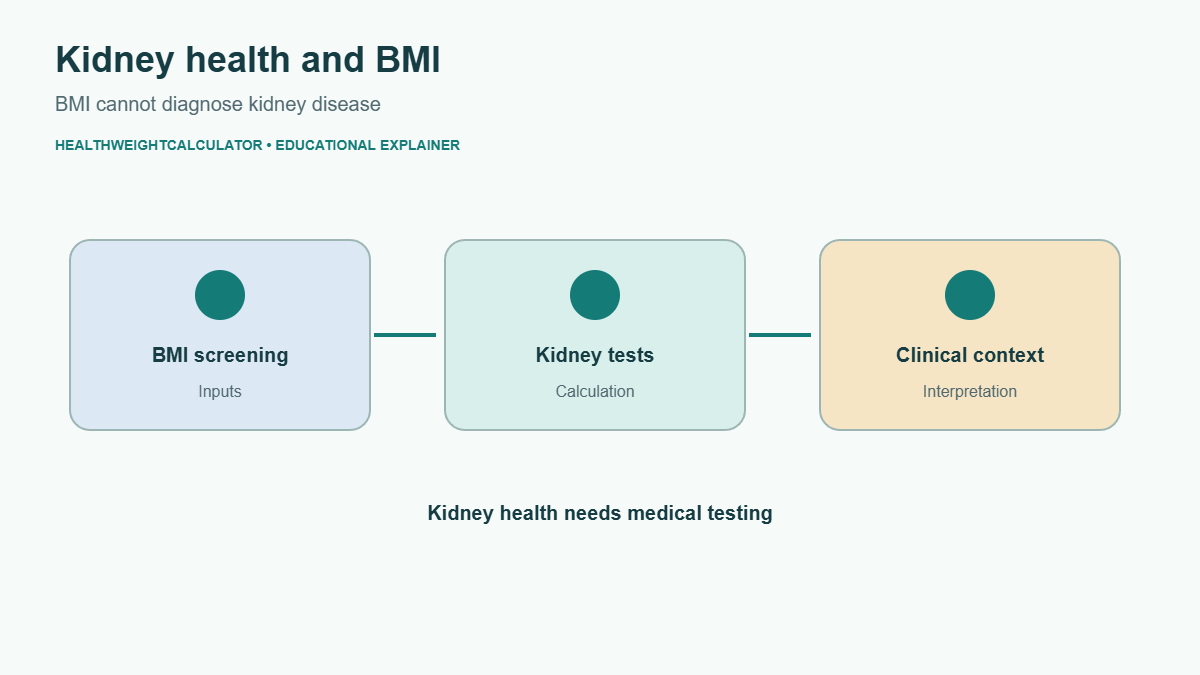
A kidney disease BMI calculator cannot diagnose chronic kidney disease or measure how well the kidneys work. BMI is calculated from height and weight; kidney function is assessed through clinical evaluation and tests, not a body-size ratio. A person can have kidney disease at different body sizes, and a BMI result cannot rule it in or out.
What clinicians use to assess kidney health
Healthcare professionals may review medical history, blood pressure, medicines, blood tests such as creatinine, which is used to estimate glomerular filtration rate (eGFR), and urine tests for albumin or other findings. The appropriate assessment depends on the person and reason for testing. The National Institute of Diabetes and Digestive and Kidney Diseases explains that blood and urine tests are used to check kidney health.
Why weight can need extra context
Fluid retention, swelling, illness, and changes in appetite can affect body weight. For people with kidney disease or dialysis, a healthcare team may provide individualized guidance on weight, fluids, and nutrition. Do not change fluid intake, diet, or medicines based on BMI or an online calculator. If you have symptoms or risk factors, contact a healthcare professional for advice.
The CDC describes BMI as a screening measure with limitations; it does not assess kidney function. Read the NIDDK guide to CKD tests and diagnosis for how kidney health is evaluated. Our BMI Prime article explains another derived BMI number, which also cannot diagnose disease.
Common questions
Can BMI show whether I have kidney disease?
No. BMI does not measure kidney function or diagnose kidney disease.
What tests may assess kidney function?
Clinicians may use blood and urine tests, alongside history and examination.
Should I change fluids or diet based on BMI?
No. Follow individualized advice from your healthcare team, especially if you have kidney disease.
Sources
Educational information only; not a kidney test or medical advice.
