 Skip to content
A longevity BMI calculator cannot tell how long an individual will live. BMI is calculated from height and weight; it is not a biological-age test or a lifespan measurement. A number produced by an online tool should not be presented as a personal prediction of death, illness, or future health.
Population patterns are not individual forecasts
Researchers may study relationships between body-size measures and health outcomes in groups. Such findings describe patterns in populations and do not determine what will happen to one person. Individual health is shaped by many factors, including age, medical history, genetics, environment, access to care, and behaviors. A BMI score cannot summarize those influences.
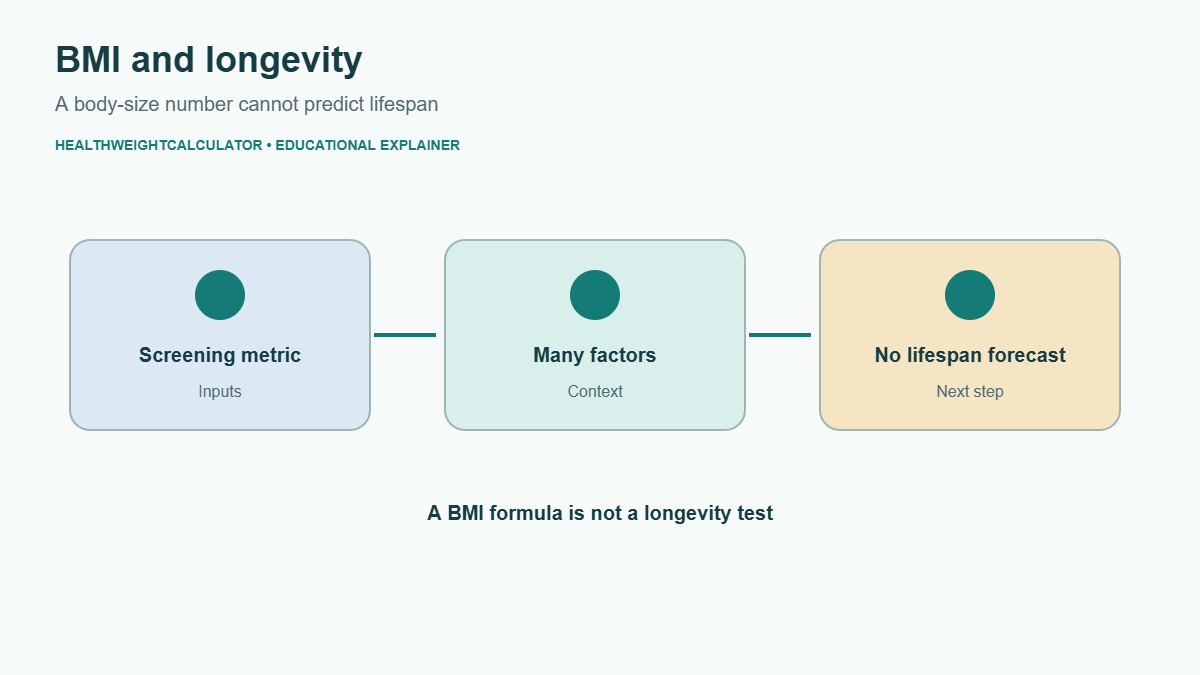
What BMI can—and cannot—do
The CDC describes BMI as a screening measure that does not distinguish fat, muscle, and bone. It may be one part of a broader conversation, but it does not diagnose a condition or provide a personal prognosis. A calculator that converts BMI into years of life may imply certainty that the input cannot support.
Do not make health decisions or feel alarmed by a lifespan score. If you have health concerns, discuss them with a healthcare professional who can consider your history and appropriate tests. For more context, read our BMI Prime article and the CDC BMI overview. Both explain why a transformed BMI value is still not a complete health assessment.
Common questions
Can BMI tell my life expectancy?
No. It cannot predict an individual lifespan.
Does a population study apply to me exactly?
No. Group-level patterns do not determine an individual outcome.
Should a score change my care?
No. Discuss health decisions with a qualified healthcare professional.
Sources
Educational information only; not a life-expectancy estimate, diagnosis, or medical advice.
