 Skip to content
A macro calculator for a weight loss plan converts an energy estimate into carbohydrate, protein, and fat targets. The conversion can be mathematically correct while the starting calorie or percentage assumptions are unsuitable. Use it as a planning tool, not a medical prescription.
A transparent worked example
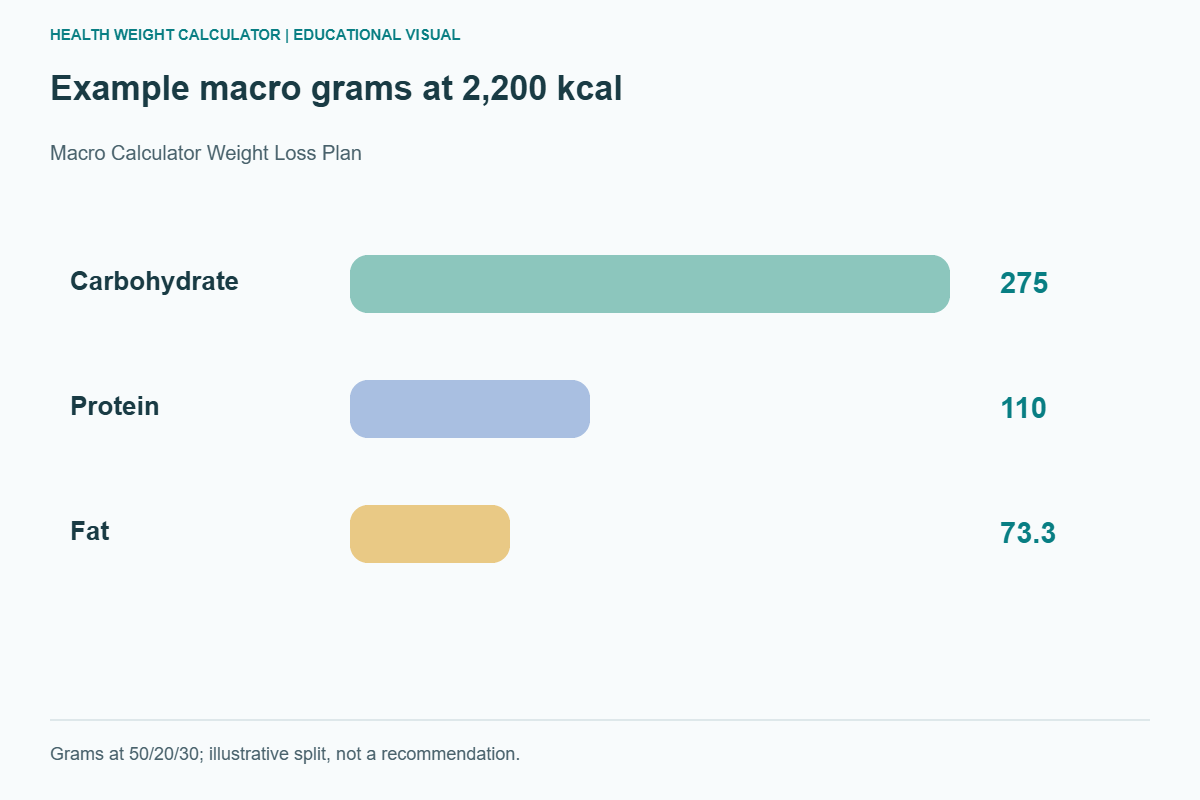
Consider an illustrative 2,200 kcal total with 50% carbohydrate, 20% protein, and 30% fat. Using conventional factors of 4 kcal per gram for carbohydrate and protein and 9 for fat gives:
| Macro | Energy | Calculated grams |
|---|---|---|
| Carbohydrate | 1,100 kcal | 275 g |
| Protein | 440 kcal | 110 g |
| Fat | 660 kcal | About 73.3 g |
This split and total are examples, not recommendations. Label rounding, fibre, and other components can make real-food totals differ from simple arithmetic.
Check adequacy before optimization
Macro totals do not establish whether a diet supplies enough vitamins, minerals, fibre, or overall food. Include varied suitable foods and practical portions. Medical conditions, training, life stage, and preferences can change an appropriate plan.
Make tracking optional
Some adults find gram targets useful; others do better with regular meals and a flexible food pattern. Do not force tracking when it creates distress or rigid eating. A dietitian can help choose an approach that fits the person.
Questions
Is one split best for everyone?
No. Percentages alone do not define a suitable diet or guarantee weight loss.
Should I adjust macros after every weigh-in?
No. Short-term fluid changes do not justify repeated restriction. Review longer patterns and wellbeing.
Sources and further reading
- NIH ODS: Dietary Reference Intakes and Nutrient Recommendations
- FDA: Understanding the Nutrition Facts Label
- NIDDK: Eating and Physical Activity
Related reading: protein intake guidance. Educational information, not a diagnosis or personalized nutrition prescription.
Short visual recap
Visual recap transcript
A macro calculator for a weight loss plan converts an energy estimate into carbohydrate, protein, and fat targets. The conversion can be mathematically correct while the starting calorie or percentage assumptions are unsuitable. Use it as a planning tool, not a medical prescription.
Example macro grams at 2,200 kcal. Carbohydrate: 275; Protein: 110; Fat: 73.3. Grams at 50/20/30; illustrative split, not a recommendation.
No. Percentages alone do not define a suitable diet or guarantee weight loss.
