 Skip to content
Weight loss can occur without a planned exercise programme, but that does not make movement irrelevant to health. Weight change depends on energy balance over time, while food, health conditions, medicines, sleep, and daily life influence that balance. A gym membership is not a requirement for seeking support with weight.
Separate workouts from all movement
Exercise is planned activity, but walking to a bus stop, doing household tasks, and moving at work also contribute to daily movement. A person who does not attend exercise classes is not necessarily inactive. Conversely, a short workout does not describe the rest of the day.
If pain, disability, illness, caregiving, or time constraints limit activity, acknowledge that context. You do not need to earn meals through exercise. Ask a clinician or rehabilitation professional about comfortable, appropriate options when necessary.
Food changes can affect energy intake
A practical starting point might be organizing regular meals, reviewing drinks, or choosing portions that leave you comfortably satisfied. Keep variety and adequate nourishment rather than replacing exercise with severe restriction. There is no single low-calorie allowance that is safe for everyone.
NIDDK emphasizes a healthy eating plan that can be maintained. Frozen vegetables, beans, eggs, yogurt, tofu, whole grains, and other familiar foods can support convenient meals, depending on preferences and needs. You do not need a product marketed as a weight-loss food.
Why activity is still worth discussing
The CDC notes that activity supports physical and mental health. Its general adult guidance includes at least 150 minutes of moderate-intensity activity weekly plus two strengthening days, while also emphasizing that some activity is better than none. These recommendations are health guidance, not a demand to exercise through pain.
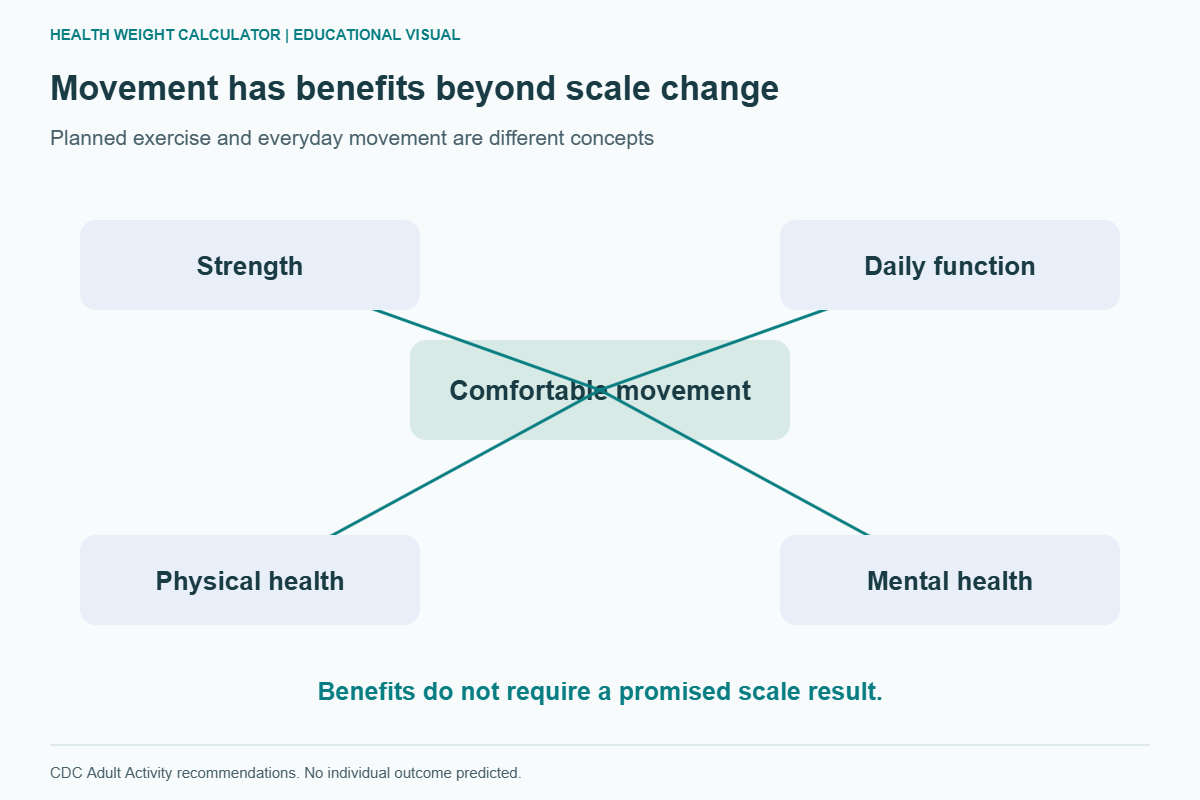
Movement can support strength, function, and maintenance even if it does not produce a large scale change. Adapted options may include shorter walking breaks, seated exercise, or exercises chosen with a professional. What is suitable depends on your abilities and health.
Watch for an unhelpful trade-off
Trying to compensate for limited exercise by skipping meals or cutting intake aggressively can undermine nutrition and energy. Similarly, forcing an activity that aggravates an injury may make the situation worse. If your options feel restricted, individualized support can be more useful than trying harder at an unsuitable plan.
Weight loss is not always the right goal, particularly during illness, pregnancy, recovery, or an eating disorder. Discuss your priorities with a healthcare professional rather than assuming a scale change is necessary.
Frequently asked questions
Do I need a gym?
No. Health-supporting movement can happen in many settings, and it can be adapted.
Should I eat much less if I cannot exercise?
Not automatically. A personal plan must still meet nutritional needs.
Can a calculator predict the result?
No. Our BMR explanation and workout-calorie guide describe why energy numbers are estimates.
Short visual recap
Sources
- NIDDK: Eating Patterns, Activity, and Weight Management
- CDC: Adult Activity and the Benefits of Moving More
General adult education, not a recommendation to avoid activity or restrict food.
