 Skip to content
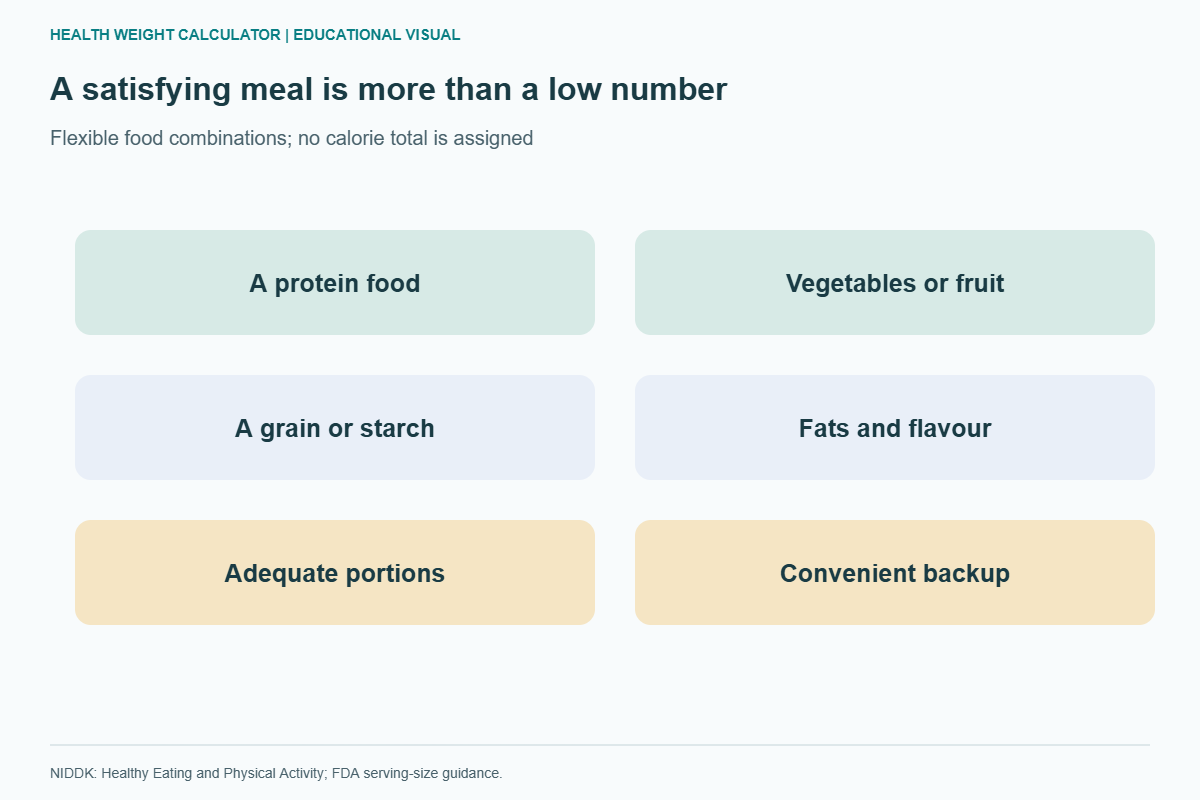
A satisfying meal needs more thought than simply choosing the lowest calorie number. Protein foods, fibre-containing foods, enjoyable flavours, adequate portions, and regular meal timing can all influence whether a meal works for you. There is no combination that guarantees fullness for every person.
Start with a meal you already like
It is often easier to adapt a familiar dish than to follow an entirely new menu. Add vegetables to a bean chilli, use a mix of vegetables in a noodle bowl, or serve an omelette with toast and fruit. Keep enough food to make it a meal rather than turning it into a collection of very small substitutions.
NIDDK recommends a varied pattern including vegetables, fruit, whole grains, and different protein foods. That framework leaves room for cultural preferences, convenience foods, and budget limits.
Four flexible meal ideas
| Meal base | Add variety and substance |
|---|---|
| Lentil soup | Vegetables, wholegrain bread, and a topping you enjoy |
| Tofu or chicken bowl | Rice, vegetables, and a measured sauce if tracking |
| Eggs or beans on toast | Tomatoes, mushrooms, or a side of fruit |
| Yogurt or suitable alternative | Oats, fruit, and nuts or seeds as appropriate |
These are not calculated recipes or promised calorie totals. Brands, cooking oils, sauces, portions, and additions affect energy and nutrients. Choose alternatives for allergies, dietary restrictions, or medical advice.
Notice which change solves the problem
If lunch leaves you hungry soon afterward, it may need more food, a different balance, or a more reliable eating time. Increasing the pile of low-calorie vegetables while removing most protein and starch can leave a meal inadequate. Respond to persistent hunger rather than treating it as something to overcome through willpower.
Conversely, an ingredient added without noticing its amount can change a recorded calorie total. If you track, include oils and sauces without making them forbidden. FDA’s label guidance helps distinguish a labelled serving from your actual portion.
Keep convenience and enjoyment
Frozen vegetables, canned beans, leftover grains, and simple cooked proteins can reduce preparation time. A meal you can make when tired is valuable. You do not have to cook everything from scratch or avoid all processed food to eat adequately.
See our meal-planning and calorie-estimate guide and protein-intake guidance and limitations for related planning ideas.
Questions readers ask
Should every meal be as low-calorie as possible?
No. Meals need to support adequate nutrition and your daily activities.
Can I use a meal replacement instead?
Do not assume it fits your needs. Seek advice if you are replacing meals for medical or weight-management reasons.
Sources
General adult meal ideas, not a prescribed calorie-controlled menu.
Short visual recap
Visual recap transcript
A satisfying meal needs more thought than simply choosing the lowest calorie number. Protein foods, fibre-containing foods, enjoyable flavours, adequate portions, and regular meal timing can all influence whether a meal works for you. There is no combination that guarantees fullness for every person.
A satisfying meal is more than a low number. A protein food; Vegetables or fruit; A grain or starch; Fats and flavour; Adequate portions; Convenient backup. Conceptual food choices, not quantities or promised outcomes.
No. Meals need to support adequate nutrition and your daily activities.
