 Skip to content
A calorie deficit calculator compares estimated energy expenditure with intake. The difference is an estimated energy gap, not a direct measurement of fat loss. Both sides of the calculation contain uncertainty, and the body does not maintain a perfectly constant response over time.
Follow the subtraction
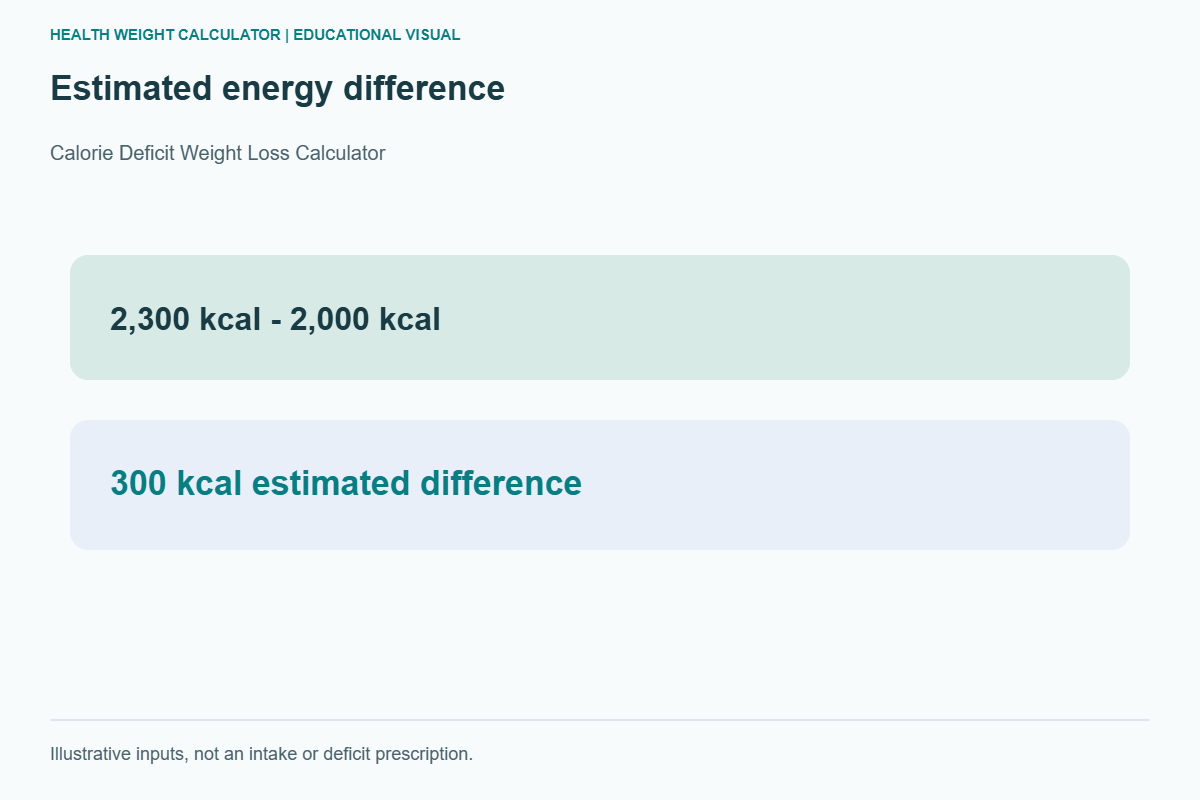
Suppose a calculator estimates expenditure at 2,300 kcal a day and a food record totals 2,000 kcal. The arithmetic difference is 300 kcal. Those numbers are illustrative, not a recommended intake or deficit. If expenditure or food recording is inaccurate, the true gap may be different.
Avoid the activity double count
A daily expenditure estimate may already include planned workouts through its activity setting. Adding all watch-reported exercise calories on top can count the same activity twice. Devices may also report gross calories, including energy that would have been used at rest, rather than only additional activity energy.
Before changing food intake, check what the calculator and device actually mean. A very precise output cannot compensate for unclear definitions.
Why the scale will not follow a fixed rule
Water, glycogen, bowel contents, medicines, and menstrual changes affect body weight. Energy needs also change during weight change. NIDDK’s dynamic planner illustrates why a static calorie-to-weight rule is not a dependable long-term prediction.
Review a plan responsibly
- Confirm that weight loss is suitable for your circumstances.
- Keep meals adequate; do not treat a larger gap as automatically better.
- Review longer trends, strength, hunger, and wellbeing.
- Seek advice for symptoms, unexpected loss, or a proposed intake that is difficult to sustain.
Common questions
Should I subtract more when progress slows?
Not automatically. First check assumptions, measurement consistency, medical context, and whether maintenance is appropriate.
Is this suitable for everyone?
No. Minors, pregnant or breastfeeding people, and those with relevant medical or eating-disorder concerns need individualized care rather than a generic deficit.
Sources and further reading
- NIDDK: Body Weight Planner and its limitations
- CDC: Losing Weight
- NIDDK: Eating and Physical Activity
Related reading: daily calorie needs and estimate limitations. Educational information, not a personalized diet prescription.
Short visual recap
Visual recap transcript
A calorie deficit calculator compares estimated energy expenditure with intake. The difference is an estimated energy gap, not a direct measurement of fat loss. Both sides of the calculation contain uncertainty, and the body does not maintain a perfectly constant response over time.
Estimated energy difference. 2,300 kcal – 2,000 kcal; 300 kcal estimated difference. Illustrative inputs, not an intake or deficit prescription.
Not automatically. First check assumptions, measurement consistency, medical context, and whether maintenance is appropriate.
