 Skip to content
A weight loss surgery eligibility calculator can highlight reasons to discuss a referral, but it cannot approve surgery. Assessment depends on health conditions, prior treatment, expected benefits and risks, readiness for follow-up, and the standards used by your local specialist service and insurer.
Why BMI is not the whole decision
NIDDK’s patient information describes surgery as an option for some adults with BMI 40 or more; BMI 35 or more with a serious obesity-related condition; or BMI 30 or more with difficult-to-control type 2 diabetes despite treatment. These examples are not a universal or exhaustive eligibility rule. Professional guidelines, local services, and coverage policies may differ.
A calculator should name the guidance it uses instead of displaying a definitive eligible or ineligible label. A result below one service’s threshold does not replace individualized medical advice.
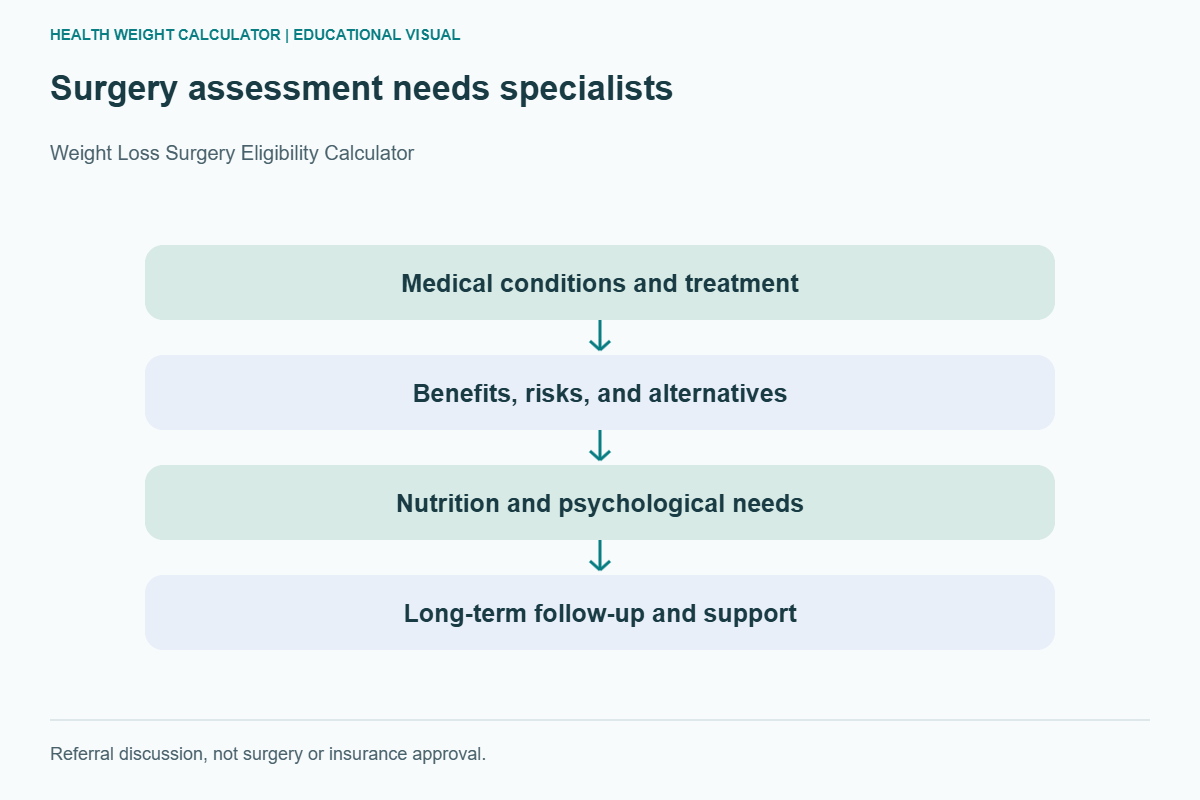
What a specialist assessment considers
- Obesity-related conditions and the response to nonsurgical treatment.
- Medical, nutritional, and psychological needs.
- Procedure-specific risks, expected benefits, and alternatives.
- Capacity and support for long-term follow-up and required supplements.
- Costs, access, and the practical demands of recovery.
Bring a medication list, relevant diagnoses, prior treatment history, and questions about ongoing care. Surgery is not a failure of willpower, and deciding against it is not a moral judgment either.
Questions
Can an online result guarantee insurance coverage?
No. Coverage criteria and documentation requirements must be checked directly with the relevant service.
Can teenagers use adult eligibility cutoffs?
No. Adolescent assessment belongs with a multidisciplinary pediatric specialist team. An adult calculator should not decide a young person’s treatment.
Sources and further reading
Related reading: BMI risk screening and its limitations. Educational information, not a diagnosis or personalized treatment plan.
Short visual recap
Visual recap transcript
A weight loss surgery eligibility calculator can highlight reasons to discuss a referral, but it cannot approve surgery. Assessment depends on health conditions, prior treatment, expected benefits and risks, readiness for follow-up, and the standards used by your local specialist service and insurer.
Surgery assessment needs specialists. Medical conditions and treatment then Benefits, risks, and alternatives then Nutrition and psychological needs then Long-term follow-up and support. Referral discussion, not surgery or insurance approval.
No. Coverage criteria and documentation requirements must be checked directly with the relevant service.
