 Skip to content
A strength training weight loss calculator cannot infer your energy use from the weight on a bar alone. Exercises, rest periods, repetitions, technique, body size, and effort all matter. The benefits of resistance training also extend beyond the number of calories estimated for a session.
Describe the work rather than the label
A 45-minute gym visit can include substantial rest and setup. Applying a continuous vigorous-exercise value to the whole visit may overestimate demand. Two sessions with the same duration can have very different movement patterns.
Volume load, sometimes calculated as load multiplied by repetitions and sets, describes one aspect of training. It is not a calorie equation, and it should not be compared uncritically across different exercises or machines.
Why the scale may not tell the whole story
Changes in muscle, fat, glycogen, and water can overlap. Soreness after new training may also coincide with fluid changes. A stable weight does not mean no useful adaptation occurred, and a body-fat scale cannot precisely separate every change.
Track meaningful progress
- Use consistent technique and appropriate range of motion.
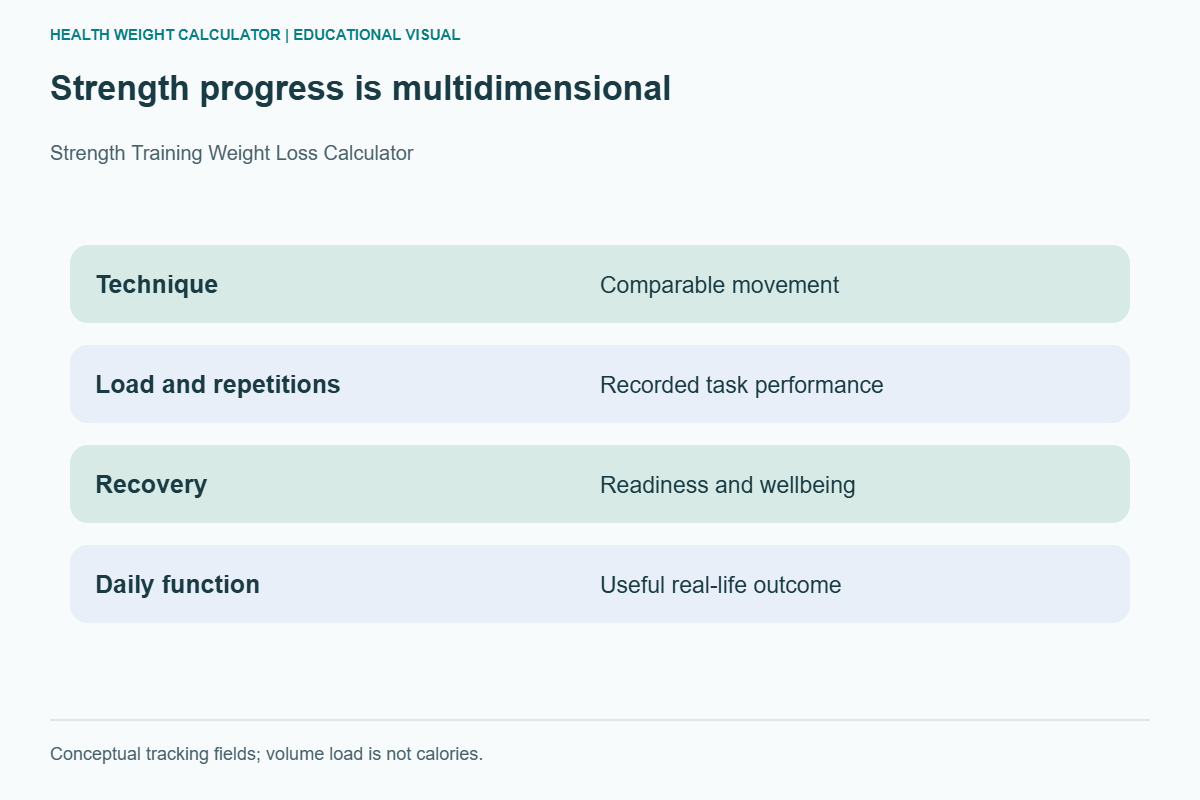
- Record loads, repetitions, effort, and recovery where helpful.
- Notice easier daily tasks and improved movement confidence.
- Allow adequate food, rest, and gradual progression.
CDC adult guidance includes muscle-strengthening activity alongside aerobic movement. A qualified professional can help adapt training for health conditions, pain, or unfamiliar movements.
Questions
Will lifting automatically make the scale drop?
No. Weight response varies, and scale loss is not the only worthwhile outcome.
Should I add every estimated lifting calorie to my food allowance?
Not automatically. Check whether daily expenditure already includes training and recognize that the session estimate is uncertain.
Sources and further reading
- NIDDK: Factors Affecting Weight and Health
- CDC: Measuring Physical Activity Intensity
- Maintenance of Lost Weight and Long-Term Management of Obesity (2018 review)
Related reading: daily calorie needs and estimate limitations. Educational information, not an individualized treatment or exercise plan.
Short visual recap
Visual recap transcript
A strength training weight loss calculator cannot infer your energy use from the weight on a bar alone. Exercises, rest periods, repetitions, technique, body size, and effort all matter. The benefits of resistance training also extend beyond the number of calories estimated for a session.
Strength progress is multidimensional. Technique|Comparable movement; Load and repetitions|Recorded task performance; Recovery|Readiness and wellbeing; Daily function|Useful real-life outcome. Conceptual tracking fields; volume load is not calories.
No. Weight response varies, and scale loss is not the only worthwhile outcome.
