 Skip to content
An over 60 weight loss calculator cannot determine whether losing weight will improve your health. Muscle strength, mobility, medical conditions, medication, appetite, and nutritional adequacy are central considerations. A lower scale number is not automatically a better outcome.
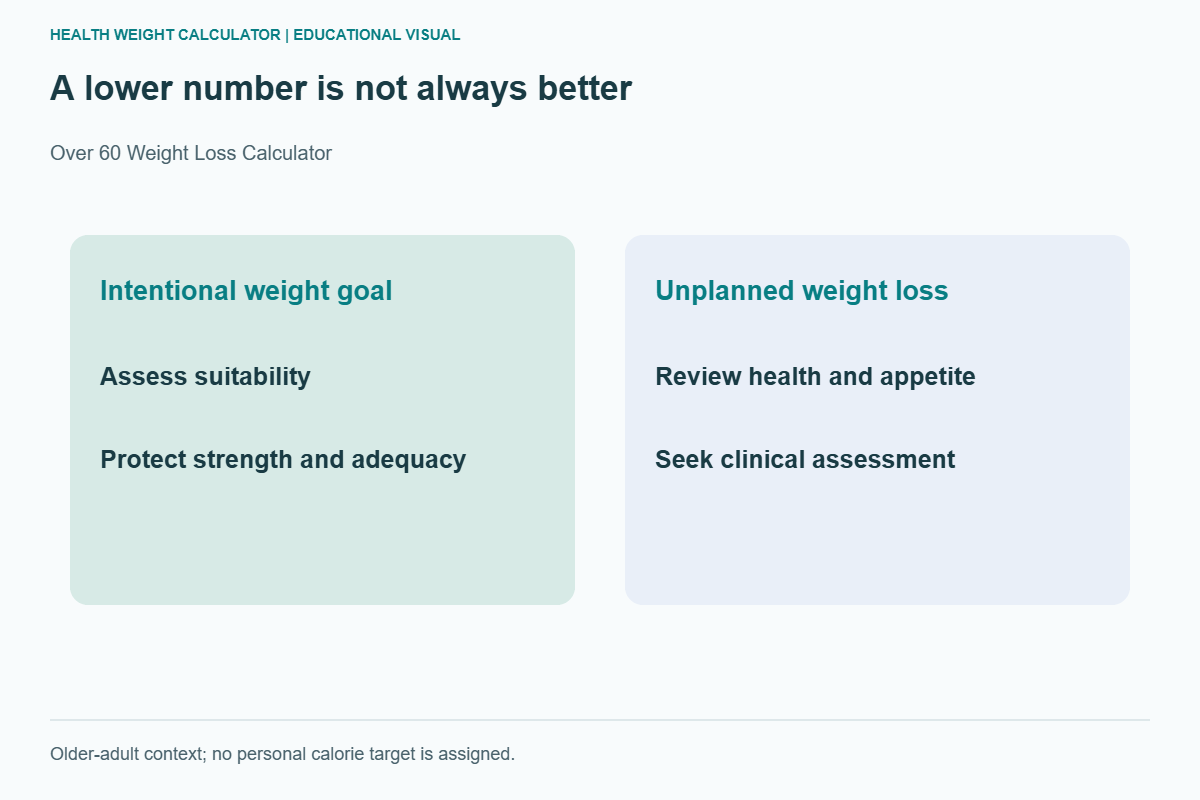
Separate intentional goals from unexplained loss
Unplanned weight loss, poor appetite, or difficulty shopping, cooking, chewing, or swallowing needs assessment. Do not treat those changes as successful dieting. Illness, medicines, dental problems, mood, and practical barriers may contribute.
Why an energy equation is incomplete
Age is included in many resting-energy formulas, but the result does not measure muscle mass, frailty, or functional ability. Activity multipliers are also rough estimates. A very precise calorie output may hide large uncertainty about the person’s actual needs.
BMI can contribute to screening, but it cannot distinguish muscle from fat. Preserving strength and adequate intake may take priority over moving into a lower category.
Discuss an individualized plan
- Review whether weight reduction, maintenance, or nutrition support is most appropriate.
- Plan adequate meals and protein foods within any medical restrictions.
- Include suitable strength, balance, and aerobic activity with appropriate adaptations.
- Monitor function, symptoms, and recovery alongside weight if tracking is helpful.
Kidney disease, diabetes treatment, heart conditions, and other illnesses can alter advice. Do not adopt a high-protein target or reduce medication solely on an app’s recommendation.
Questions
Should everyone over sixty eat less?
No. Some people need help maintaining or increasing intake.
What is a useful outcome besides weight?
Easier daily tasks, stable strength, adequate nourishment, confidence in movement, and improved relevant medical measures can all be meaningful.
Sources and further reading
- MedlinePlus: Nutrition for Older Adults
- NIDDK: Weight and Health Factors
- NIDDK: Staying Active at Any Size
Related reading: BMI interpretation in older adults. Educational information, not a diagnosis or personalized treatment plan.
Short visual recap
Visual recap transcript
An over 60 weight loss calculator cannot determine whether losing weight will improve your health. Muscle strength, mobility, medical conditions, medication, appetite, and nutritional adequacy are central considerations. A lower scale number is not automatically a better outcome.
A lower number is not always better. Intentional weight goal|Assess suitability|Protect strength and adequacy; Unplanned weight loss|Review health and appetite|Seek clinical assessment. Older-adult context; no personal calorie target is assigned.
No. Some people need help maintaining or increasing intake.
