 Skip to content
Body weight alone cannot predict an individual’s chance of stroke. Important risk factors include blood pressure, smoking, diabetes, cholesterol, and some heart conditions.
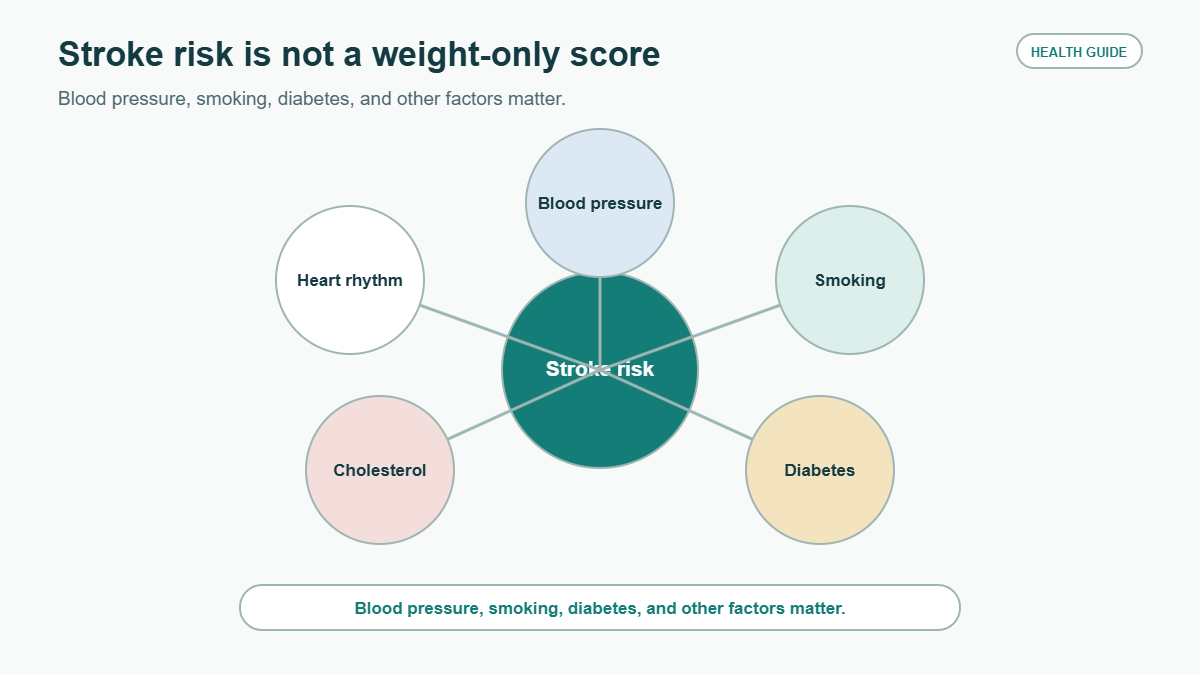
How weight can relate to stroke risk
The CDC lists obesity among factors associated with stroke, alongside high blood pressure, high cholesterol, diabetes, heart disease, smoking, and prior stroke or transient ischemic attack. CDC explains that excess weight may be linked with changes in cholesterol, blood pressure, and diabetes risk. These relationships do not create a direct formula from weight to an individual stroke probability.
A BMI calculator cannot measure blood pressure, cholesterol, heart rhythm, blood glucose, or medical history. A clinician can consider those factors and any relevant history when discussing prevention. Read the CDC’s stroke risk factor information for a broader overview.
What this calculator-style page can and cannot tell you
This page provides general education about weight and health factors; it does not calculate stroke risk, diagnose a condition, or replace prevention advice. If you have concerns, discuss them with a healthcare professional, who can decide whether measurements or testing are appropriate. Do not delay urgent care to use a website if you think you may be having a stroke.
Our tools and calculators and weight-management resources are informational and do not estimate stroke risk.
Short video: many factors matter
Frequently asked questions
Can body weight calculate stroke risk?
No. A personal assessment involves more than weight, including blood pressure and medical history.
Does BMI diagnose a stroke-related condition?
No. BMI is a screening measurement, not a diagnosis of stroke or cardiovascular disease.
What if I am worried about my stroke risk?
Discuss your health history and relevant measurements with a healthcare professional. For urgent symptoms, do not rely on an online calculator.
Sources
Educational information only; not a stroke-risk score, diagnosis, or personalized medical advice.
