 Skip to content
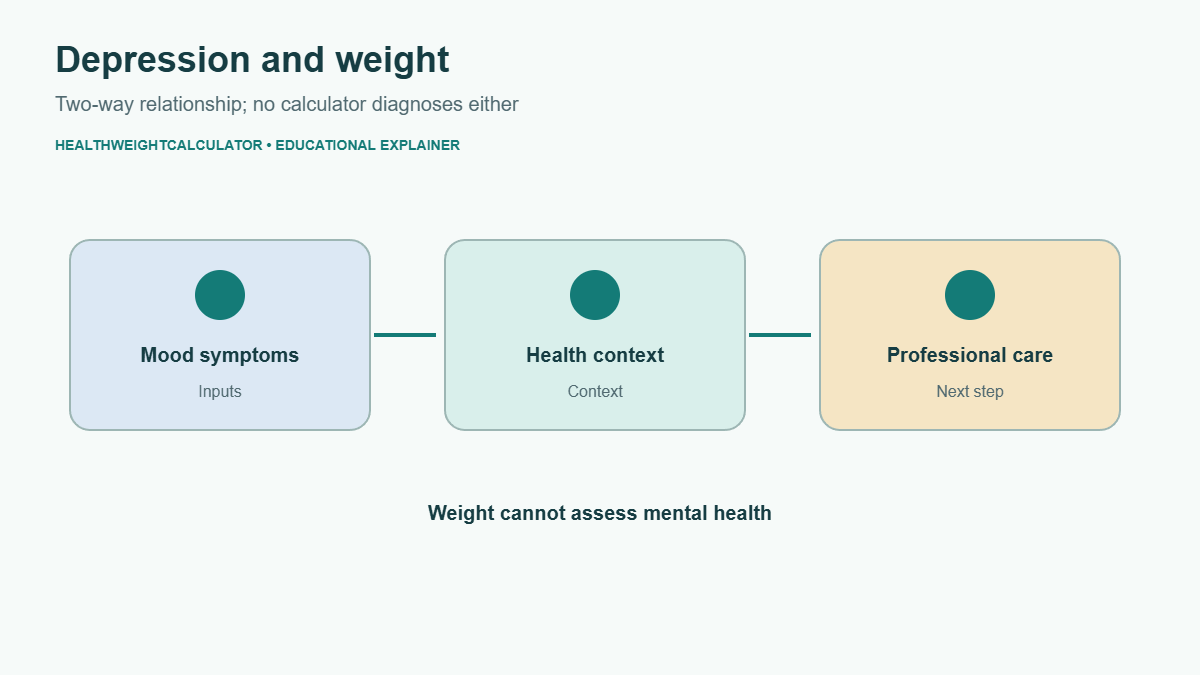
A depression and obesity link calculator cannot tell whether someone has depression, explain why their weight changed, or determine what treatment they need. Weight and mood may be affected by many overlapping influences, including health, sleep, stress, medicines, access to care, and life circumstances. A single body measurement cannot capture those factors or establish a cause.
Understand the limits of weight-based tools
Some calculators may compare body-size measurements with population data, but group-level associations do not predict an individual’s mental health. BMI itself is a screening measure with limitations; the CDC notes that it does not distinguish fat, muscle, and bone. It is not a depression screening test. A person’s weight also does not reveal their mood, functioning, or need for support.
When to seek support
If you have persistent sadness, loss of interest, changes in sleep or appetite, or difficulty managing daily life, consider speaking with a healthcare professional. The National Institute of Mental Health describes depression symptoms and treatment options. You deserve support based on what you are experiencing—not a label generated from weight.
If you are in immediate danger or may harm yourself, contact local emergency services or a crisis line in your country now. For weight or nutrition concerns, a clinician can address them separately and without stigma. Our mental health and weight article also explains why a calculator cannot assess wellbeing.
Common questions
Can weight tell me whether I am depressed?
No. Depression is assessed from symptoms and clinical context, not a body-size calculator.
Does depression always cause weight change?
No. Experiences vary; a change can have many possible causes.
Should I delay care until I change my weight?
No. You can seek mental-health support at any body size.
Sources
Educational information only; not a mental-health screening or diagnosis.
