 Skip to content
A nutrition calculator for athletes estimates requirements from limited information. It cannot fully account for training load, competition, recovery, injury, travel, growth, or medical needs. A sports dietitian can help turn rough numbers into a practical fueling plan.
Describe the training week
Record the type, duration, intensity, and timing of sessions, including rest days and double-session days. A single very-active setting can hide major variation. Avoid counting a session both in an activity multiplier and as an added calorie allowance.
Think beyond a calorie total
- Carbohydrate availability can matter for demanding training.
- Protein supports body functions and recovery, but more is not automatically better.
- Dietary fat, micronutrients, and adequate total food remain important.
- Fluid needs depend on conditions, duration, and individual response.
These principles are not individual gram or supplement prescriptions. Sport, body size, schedule, health, and life stage affect suitable targets.
Notice signs the plan needs review
Persistent fatigue, declining performance, recurrent injury, menstrual changes, poor recovery, or unplanned weight loss can indicate a need for assessment. A calculator that praises a larger deficit may miss underfueling.
Adolescent athletes need growth-aware support. Pregnancy, diabetes, kidney disease, eating-disorder history, and other medical circumstances also require qualified guidance.
Questions
Should every training day use the same target?
Not necessarily. Needs and practical meal timing can differ across the week.
Are supplements essential for performance?
No generic calculator can establish that. Review food intake, evidence, interactions, and sport-specific quality or anti-doping concerns with an appropriately qualified professional.
Sources and further reading
- NIH ODS: Exercise and Athletic Performance
- NIH ODS: Dietary Reference Intakes and Nutrient Recommendations
- FDA: Understanding the Nutrition Facts Label
- NIDDK: Eating and Physical Activity
Related reading: protein intake guidance. Educational information, not a diagnosis or personalized nutrition prescription.
Short visual recap
Visual recap transcript
A nutrition calculator for athletes estimates requirements from limited information. It cannot fully account for training load, competition, recovery, injury, travel, growth, or medical needs. A sports dietitian can help turn rough numbers into a practical fueling plan.
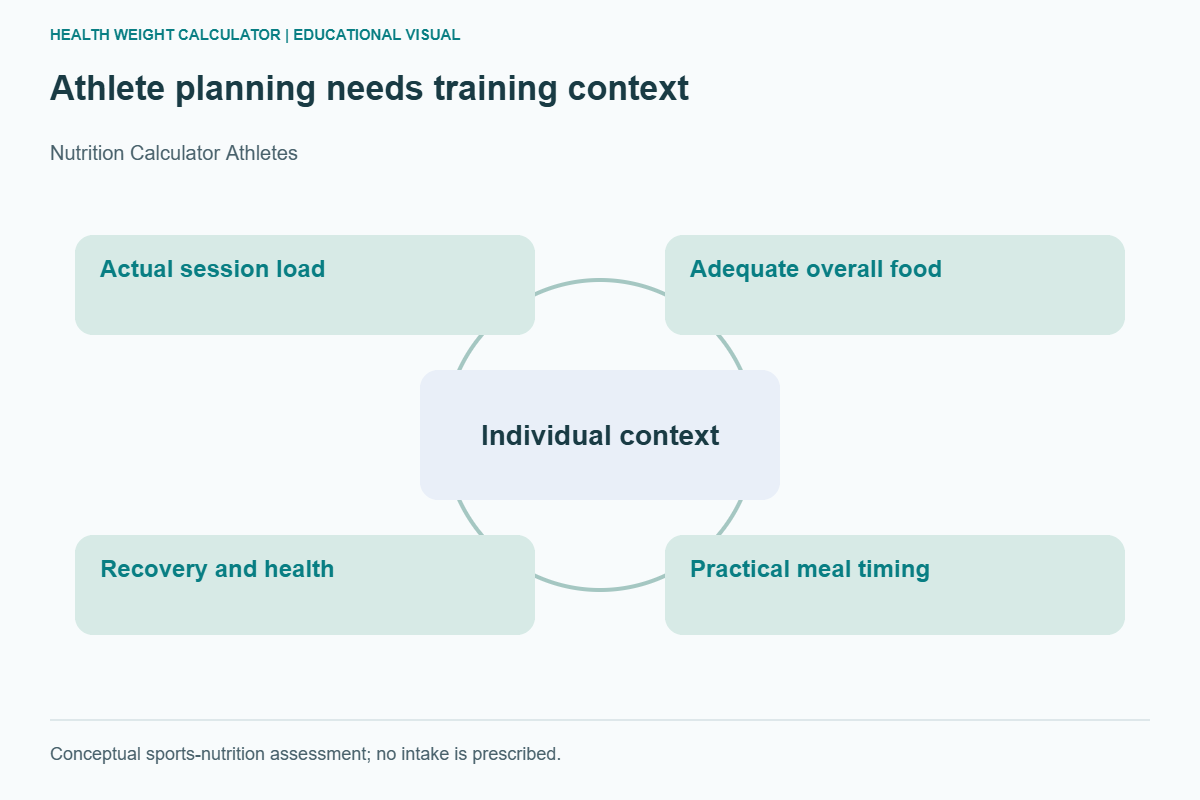
Athlete planning needs training context. Actual session load; Adequate overall food; Recovery and health; Practical meal timing. Conceptual sports-nutrition assessment; no intake is prescribed.
Not necessarily. Needs and practical meal timing can differ across the week.
