 Skip to content
A fiber daily needs calculator estimates a general intake target, often using age or energy needs. It cannot determine what is right for every person or diagnose digestive symptoms. Fiber intake comes from the overall diet, and tolerance can vary depending on the person and the foods chosen.
Where fiber comes from
Fiber is found in plant foods such as beans, lentils, vegetables, fruit, nuts, seeds, and whole grains. Food labels can help compare fiber in packaged products; check the serving size as well as the amount per serving. Different types of fiber and foods can affect digestion in different ways.
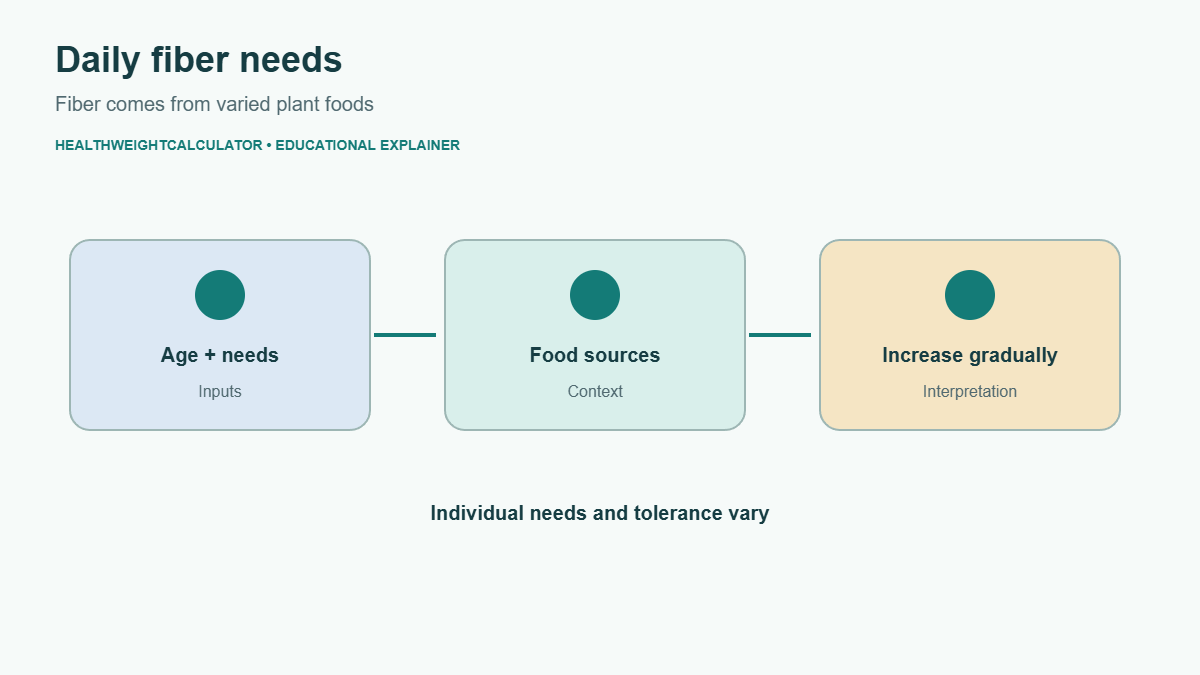
Increase gradually and drink appropriately
If you are increasing fiber, doing it gradually may be more comfortable than making a sudden large change. Fluids are also important, but the right amount depends on health, climate, activity, and any fluid restrictions from a clinician. People with digestive conditions or symptoms may need individualized advice.
MedlinePlus describes dietary fiber and common food sources. If you have persistent abdominal pain, blood in stool, unexplained weight loss, or a major change in bowel habits, seek medical advice rather than using a calculator to diagnose the cause. Our calculator collection provides general tools; a registered dietitian can help tailor nutrition advice if needed.
Common questions
Can one target fit everyone?
No. Recommendations vary with age, overall diet, and individual health.
Should I increase fiber quickly?
A gradual change may be easier to tolerate.
Can fiber fix all digestive symptoms?
No. Persistent symptoms may need clinical assessment.
Sources
Educational information only; not an individualized diet or treatment plan.

Pingback: Gut Health Nutrition Calculator | Health Weight Calculator