 Skip to content
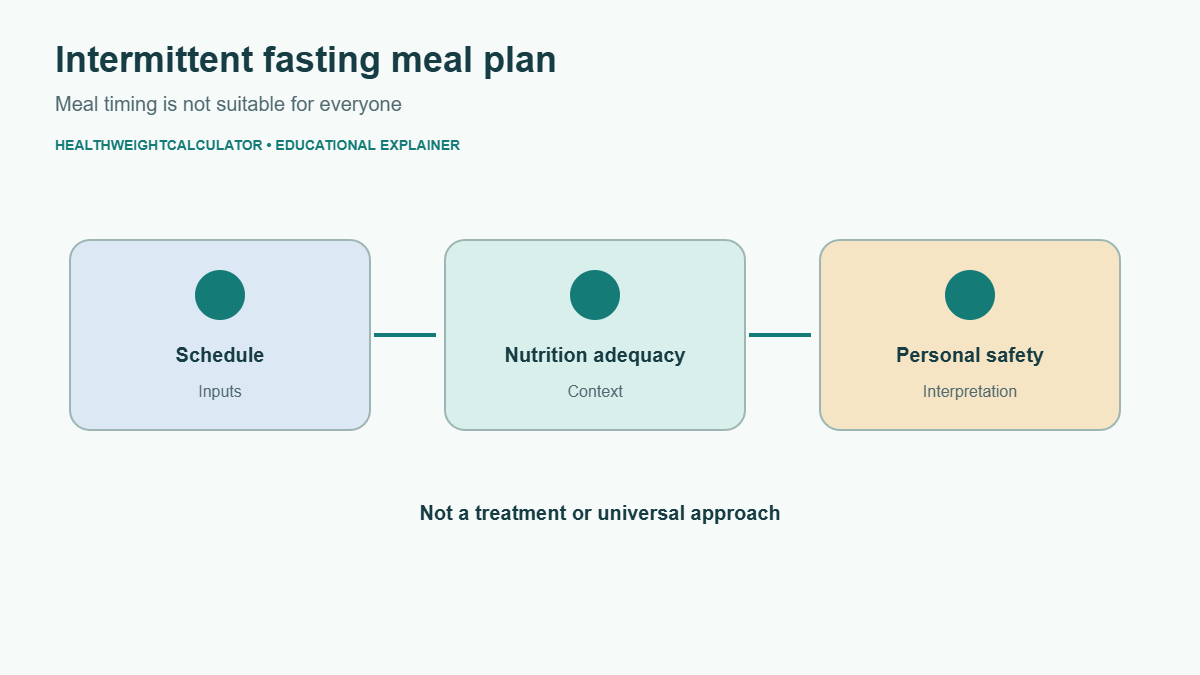
An intermittent fasting meal calculator may organize eating and fasting windows, but it cannot determine whether fasting is safe or appropriate for a particular person. Meal timing is only one part of nutrition. Food quality, adequate intake, medicines, work schedule, sleep, and health conditions also matter.
Understand what a timing calculator does
A tool may count hours between meals or suggest a schedule. That arithmetic does not evaluate nutritional adequacy, hydration, blood glucose, or the effect of fasting on someone’s health. There is no single schedule that works for everyone, and a calculator cannot promise weight loss or other health outcomes.
Who should seek advice before fasting
People who are pregnant or breastfeeding, under 18, have a history of eating disorders, or have medical conditions should not rely on a general fasting calculator. If you have diabetes or take medication that affects blood glucose, meal timing can affect treatment; discuss changes with your healthcare team first. Do not skip meals or alter medication based on an online schedule.
If fasting triggers dizziness, faintness, distress, or other concerning symptoms, stop and seek appropriate advice. The NIDDK provides general information about diabetes eating and activity; personal plans should be discussed with a qualified professional. Our calculator collection is informational, not a dietary prescription.
Common questions
Can a fasting calculator tell me whether fasting is safe?
No. It cannot review your health history or medicines.
Will a schedule guarantee weight loss?
No. An online schedule cannot predict an individual outcome.
Can I adjust diabetes medicine to fit a fasting window?
No. Talk with your healthcare team before changing meal timing or medication.
Sources
Educational information only; not a fasting prescription or medication adjustment.
