 Skip to content
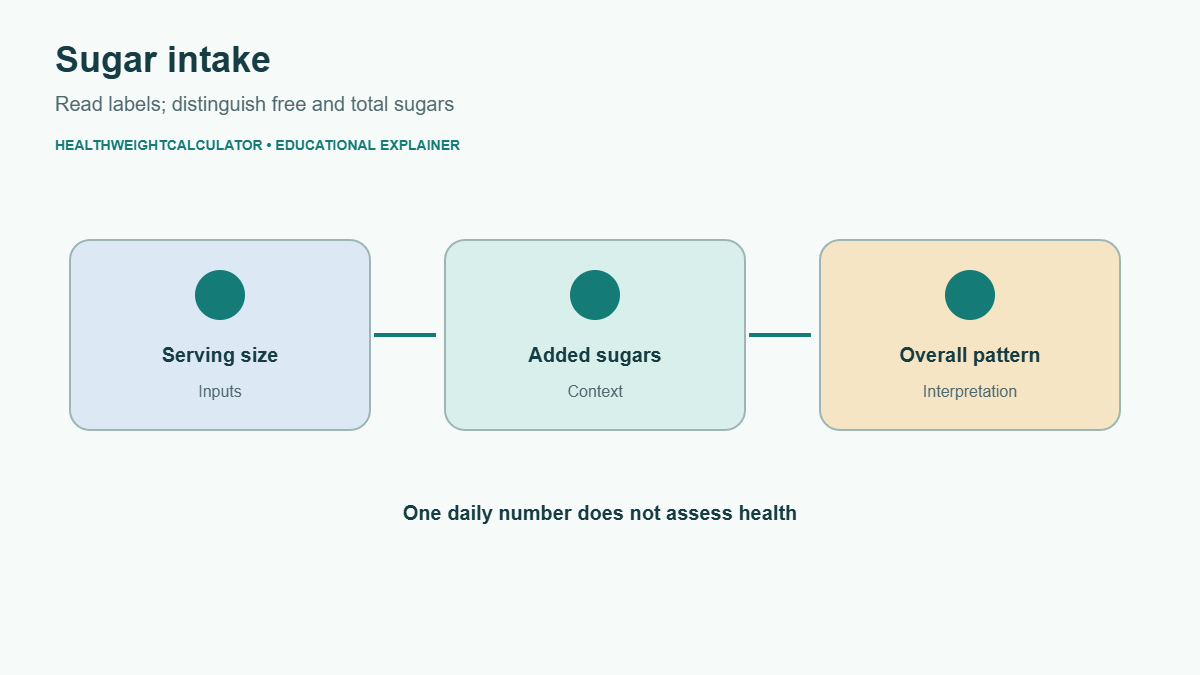
A sugar intake calculator can total sugar values from foods and drinks, but the answer depends on portion size and what the tool counts. Total sugars on a label include sugars naturally present in some foods as well as added sugars. Added sugars are listed separately on U.S. Nutrition Facts labels. Check serving sizes and whether the calculator distinguishes these categories.
Free sugars, added sugars, and total sugars
Different public-health sources use different terms and definitions. The World Health Organization’s guidance discusses “free sugars,” while U.S. labels show “added sugars.” These categories are related but are not identical in every context. Avoid comparing a daily total with a guideline unless you know which definition is being used.
Use the result as information, not a verdict
A calculator does not assess overall diet quality, medical history, or how a food fits into an individual’s needs. It should not create shame or encourage extreme restriction. If you have diabetes or another condition that affects nutrition, ask a healthcare professional or registered dietitian for individualized guidance.
The FDA explains how to use the Nutrition Facts label, including serving size and added sugars. WHO guidance recommends limiting free sugars as part of a healthy diet, but specific needs and clinical advice can vary. For other estimated nutrition targets, read our low-carb calculator guide; its result is not a substitute for individual advice.
Common questions
Are total and added sugars the same?
No. Total sugars include naturally occurring sugars; added sugars are listed separately on U.S. labels.
Does one high result diagnose a health problem?
No. It is an intake estimate, not a diagnosis.
Where can I check packaged-food information?
Use the Nutrition Facts label and pay attention to serving size.
Sources
Educational information only; not a nutrition prescription or diagnosis.
