 Skip to content
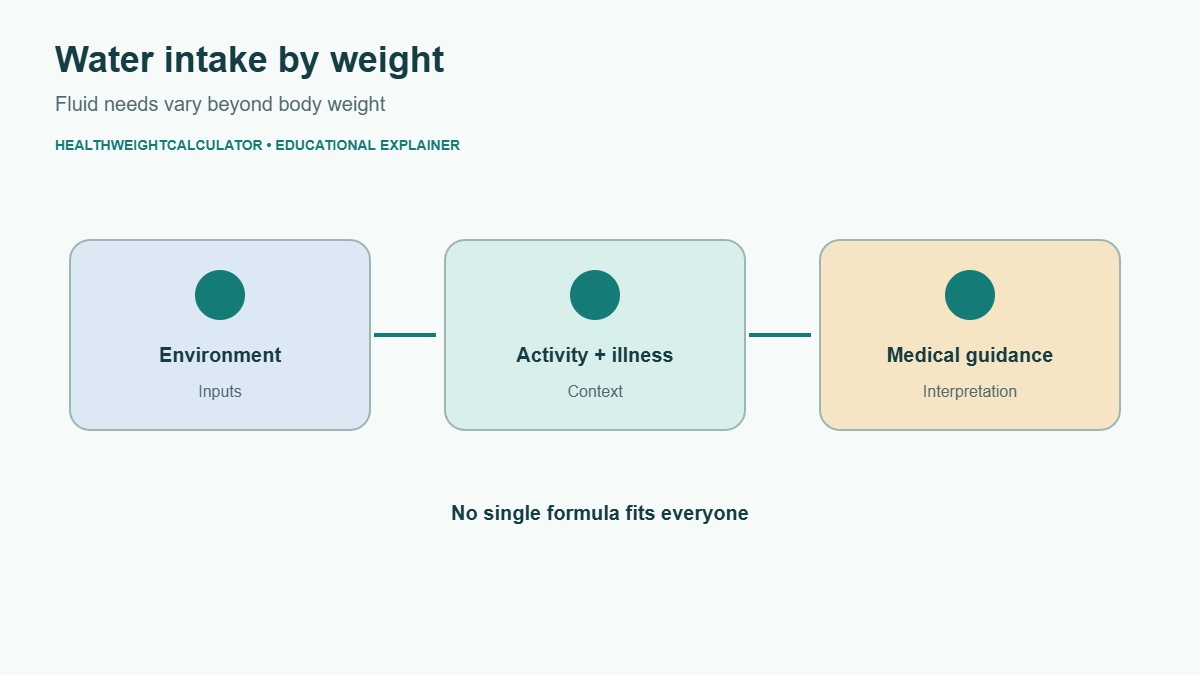
A water intake by weight calculator may multiply body weight by a fixed amount to suggest a daily fluid target. That shortcut does not account for every person’s needs. Fluid requirements can change with activity, climate, fever, illness, pregnancy, diet, medicines, and medical conditions. A general number should not override advice from a healthcare professional.
Fluids come from more than plain water
People get water from drinks and foods, and daily needs vary. Some people may need to limit fluids because of a health condition or treatment. Others may need extra attention during heat, exercise, or illness. A calculator that only uses body weight cannot know which situation applies.
Respond to context, not a rigid number
Thirst and urine color can provide general clues but are not perfect measures for every person. The NHS lists common dehydration signs and situations that increase risk. Seek medical advice if symptoms are severe or persistent. If you have heart, kidney, or liver disease, or were given a fluid restriction, follow your clinician’s instructions instead of increasing intake based on a calculator.
MedlinePlus explains fluid balance in the context of body systems and electrolytes. During exercise or hot weather, consider duration and conditions, but do not assume everyone needs sports drinks. Electrolyte balance is related to hydration; see MedlinePlus fluid-balance information.
Common questions
Is there one daily water target for all adults?
No. Needs and sources of fluids vary by person and circumstance.
Should I follow a weight-based formula if I have a fluid restriction?
No. Follow the plan given by your healthcare professional.
Do I need electrolytes for every workout?
Not necessarily; needs depend on the activity and individual circumstances.
Sources
Educational information only; not a personalized hydration prescription.
