 Skip to content
An omega-3 needs calculator may estimate an intake target, but omega-3 is a family of fats rather than one single nutrient. Foods and supplements can provide different omega-3 fatty acids, including ALA from some plant foods and EPA and DHA commonly found in seafood and certain products. A calculator’s answer depends on which type it includes.
Food and supplements are not interchangeable by label alone
Food sources include fatty fish, flaxseed, chia seeds, walnuts, and some fortified products. Supplements vary in ingredients and amounts; read the label to see which fatty acids and serving size are listed. There is not one universal supplement dose that applies to everyone, and a general intake estimate should not be used to treat a condition.
Ask before using high-dose supplements
Supplements can interact with medicines or be unsuitable in some circumstances. If you take blood-thinning medication, have a health condition, are pregnant, or are considering high doses, discuss it with a healthcare professional. Do not start a supplement to prevent or treat a disease based only on an online calculator.
The NIH Office of Dietary Supplements provides an evidence-based omega-3 fact sheet, including food sources and supplement safety. A varied eating pattern can include different sources of fats and nutrients according to personal needs. Our calculator collection is for general education and does not provide supplement prescriptions.
Common questions
Are all omega-3s the same?
No. ALA, EPA, and DHA are different fatty acids with different food sources.
Can an online tool recommend a supplement dose?
No. It cannot assess medicines, conditions, or personal safety.
Can I get omega-3 from food?
Some foods contain omega-3s; choose sources that fit your preferences and health needs.
Sources
Educational information only; not a supplement prescription or medical advice.
Visual recap transcript
An omega-3 needs calculator may estimate an intake target, but omega-3 is a family of fats rather than one single nutrient. Foods and supplements can provide different omega-3 fatty acids, including ALA from some plant foods and EPA and DHA commonly found in seafood and certain products. A calculator’s answer depends on which type it includes.
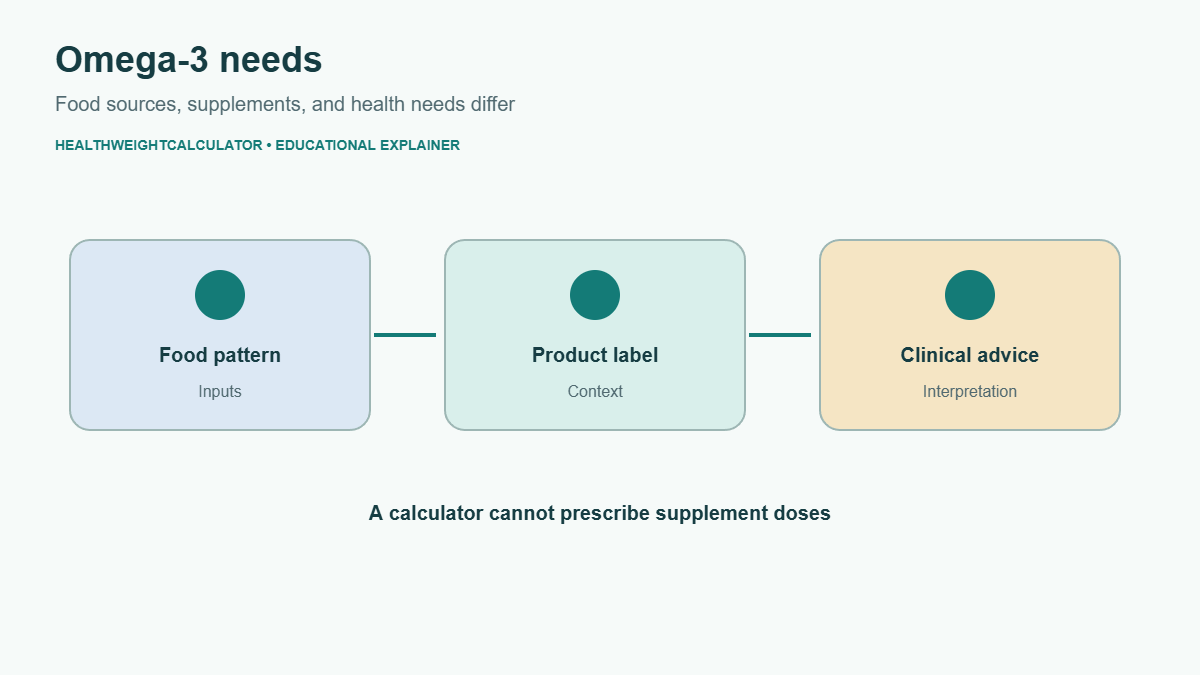
Omega-3 explainer showing food sources, supplement labels, and health context as separate considerations for intake.
No. ALA, EPA, and DHA are different fatty acids with different food sources.
