 Skip to content
A weight loss calc estimates a possible path from a starting weight toward a goal using assumptions about energy needs and behaviour. It cannot know your true daily expenditure or guarantee a finishing date. Its useful role is to make the assumptions visible so they can be checked.
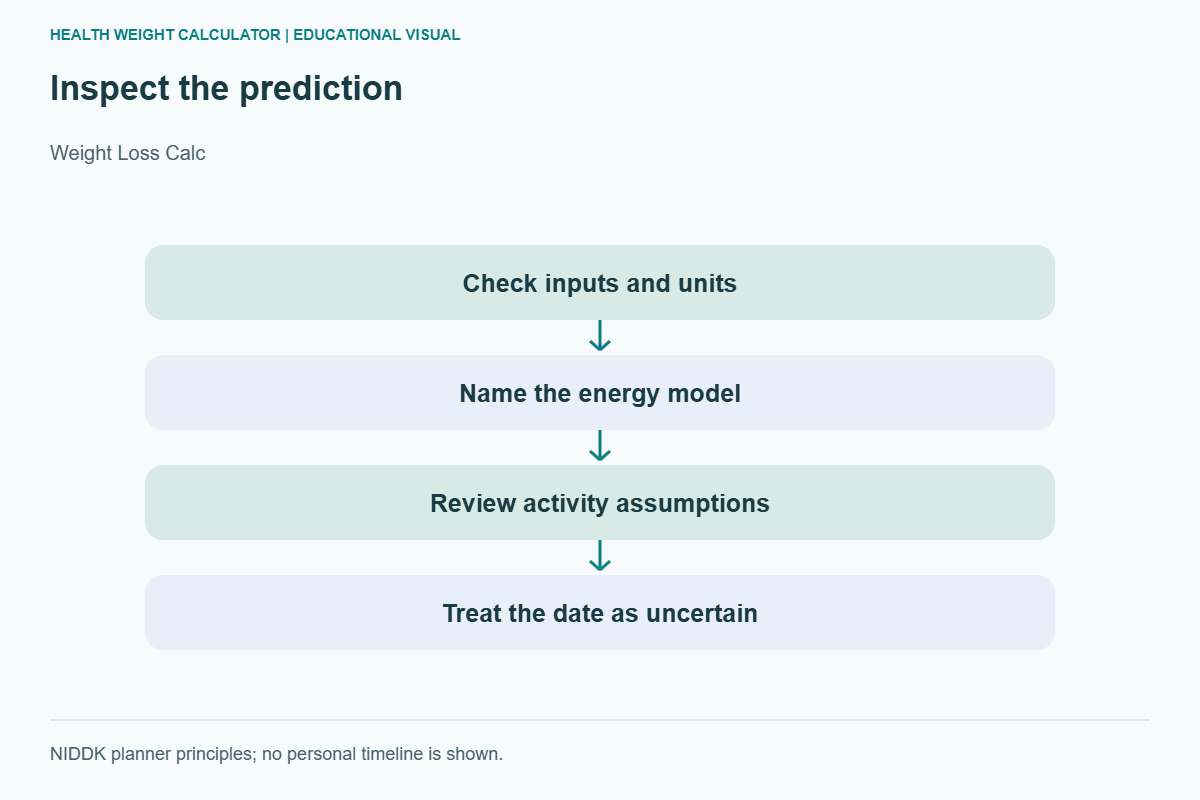
Read the inputs before the answer
Height, weight, age, activity, and the equation’s sex-related input influence many estimates. Activity descriptions are especially approximate. A desk-based day with a workout is not necessarily equivalent to a physically demanding job. Entering what you hope to do rather than what you currently do produces a misleading baseline.
Understand the model
Simple calculators convert an assumed energy gap into a constant rate of loss. Real bodies adapt: energy needs change as body size and activity change, and appetite, fluid balance, medication, and illness affect the trend. NIDDK’s Body Weight Planner uses a dynamic model, but it is still an estimate for eligible adults, not a medical assessment.
If a calculator reports 10 weeks, ask what activity and intake it assumes, whether the goal is appropriate, and how uncertainty is displayed. A precise date is not evidence that the underlying assumptions are precise.
Make the result actionable
- Keep a record of the starting assumptions and measurement units.
- Choose manageable food and activity changes rather than an extreme predicted deficit.
- Review trends and wellbeing over time instead of recalculating after every weigh-in.
- Get individual advice if the suggested intake seems difficult, inadequate, or medically unsuitable.
Calculator questions
Why do two calculators disagree?
They may use different equations, activity multipliers, or static versus dynamic models.
Who should not use it as a dieting plan?
Children, pregnant or breastfeeding people, and anyone with relevant illness or an eating-disorder history need appropriate professional guidance. NIDDK’s planner excludes pregnancy, breastfeeding, and those under 18.
Sources and further reading
- NIDDK: Body Weight Planner and its limitations
- CDC: Losing Weight
- NIDDK: Eating and Physical Activity
Related reading: daily calorie needs and estimate limitations. Educational information, not a personalized diet prescription.
Short visual recap
Visual recap transcript
A weight loss calc estimates a possible path from a starting weight toward a goal using assumptions about energy needs and behaviour. It cannot know your true daily expenditure or guarantee a finishing date. Its useful role is to make the assumptions visible so they can be checked.
Inspect the prediction. Check inputs and units then Name the energy model then Review activity assumptions then Treat the date as uncertain. NIDDK planner principles; no personal timeline is shown.
They may use different equations, activity multipliers, or static versus dynamic models.
