 Skip to content
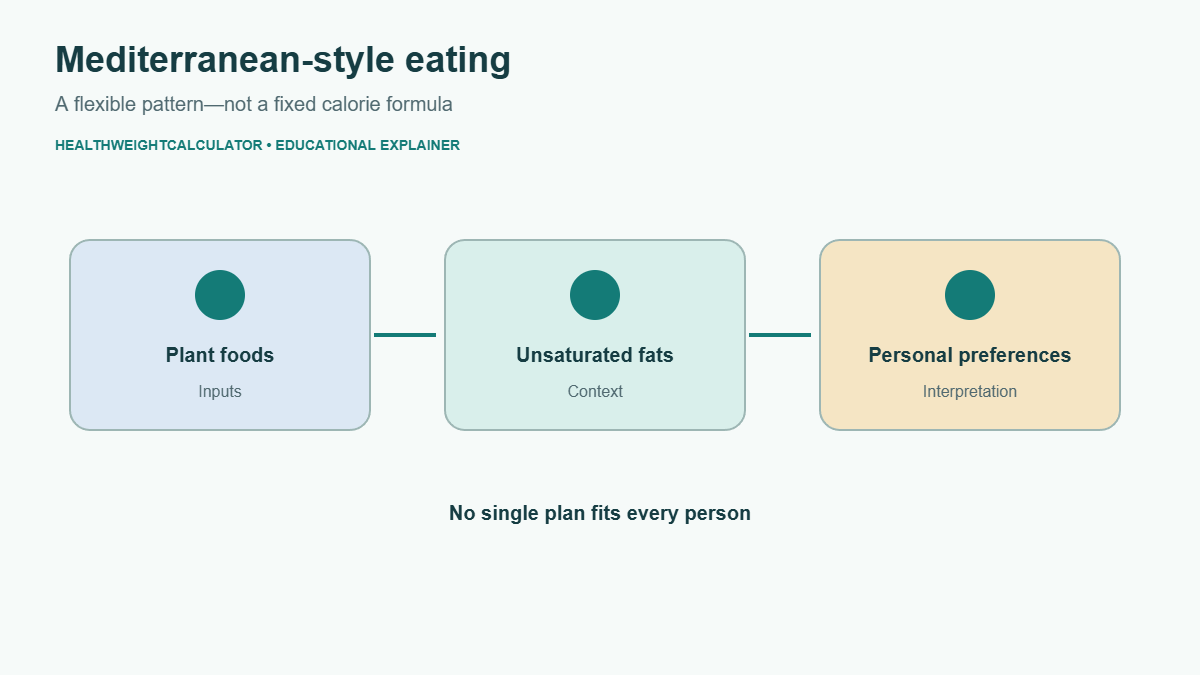
A Mediterranean diet calculator might score foods, estimate calories, or suggest a menu, but Mediterranean-style eating is a broad pattern rather than one fixed prescription. Typical descriptions emphasize vegetables, fruit, legumes, whole grains, nuts, and unsaturated fats, with choices adapted to culture, budget, access, and personal health.
There is no single exact menu
Recipes and food traditions differ across Mediterranean countries and communities. A calculator that assigns points to certain foods may be one way to reflect on a pattern, but it does not determine whether an individual diet is nutritionally adequate or medically appropriate. The label “Mediterranean” does not guarantee a particular outcome.
Use a pattern, not a score, as the guide
Consider meals that include foods you enjoy and can access. If you have allergies, digestive conditions, diabetes, kidney disease, or other nutrition needs, a general calculator may not fit. A registered dietitian or healthcare professional can help adapt a pattern safely. Do not treat a diet score as a diagnosis or substitute for treatment.
The NIDDK eating and physical activity resources offer general guidance for building a suitable eating pattern. The WHO’s healthy-diet overview also emphasizes variety and balance. Our calculator collection includes general tools, but a number cannot replace individualized nutrition care.
Common questions
Is there one official Mediterranean menu?
No. Food traditions and practical choices vary.
Does a calculator score prove the diet is healthy for me?
No. It cannot assess your full needs or medical history.
Can I adapt the pattern?
Yes. Food choices can reflect culture, access, preferences, and professional guidance.
Sources
Educational information only; not a prescribed diet or medical treatment.
Visual recap transcript
A Mediterranean diet calculator might score foods, estimate calories, or suggest a menu, but Mediterranean-style eating is a broad pattern rather than one fixed prescription. Typical descriptions emphasize vegetables, fruit, legumes, whole grains, nuts, and unsaturated fats, with choices adapted to culture, budget, access, and personal health.
Mediterranean-style eating infographic showing plant foods, unsaturated fats, and personal preferences as parts of a flexible pattern.
No. Food traditions and practical choices vary.
