 Skip to content
Athletes often ask whether BMI should be adjusted for muscle. The standard calculation is the same, but it cannot distinguish muscle from fat or describe fitness—so its meaning may be limited for an individual athlete.
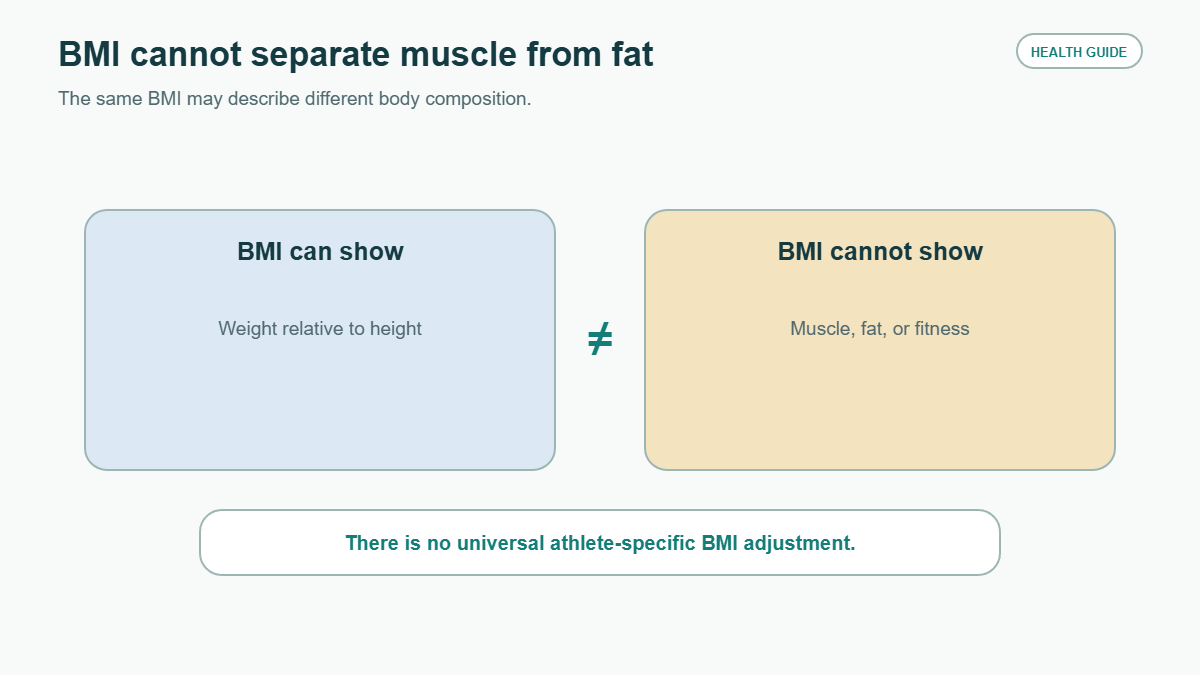
Why standard BMI can be misleading for some athletes
BMI relates weight to height, but it does not identify what contributes to that weight. The CDC explains that BMI cannot distinguish fat, muscle, and bone mass. The NIH’s MedlinePlus notes that people who are very muscular, including bodybuilders, may have a high BMI without having a lot of body fat. This limitation can matter when a person’s build or training history differs from the population for which a simple screening number is most useful.
That does not mean BMI is always irrelevant for athletes. It means the number should not be treated as a direct body-fat measurement or as a stand-alone verdict about fitness or health. A calculator cannot evaluate training load, performance, recovery, medical history, or other individual factors.
Is there an athlete-specific BMI formula?
Many online tools label a result “adjusted,” but there is no single standard adjustment endorsed by the CDC or NIH that applies to all athletes. Formulas that claim to correct BMI for muscle should explain their method and evidence; a changed label does not make the result a direct assessment of body composition. This page therefore reports the standard concept and does not invent an adjustment.
If a screening number conflicts with your experience or a health concern, ask a qualified clinician or sports-medicine professional what assessment is appropriate. Other measurements may have their own limitations and should be selected and interpreted by a professional rather than used as a substitute diagnosis. Avoid making restrictive diet or training changes based only on BMI.
For general background, read the CDC’s BMI FAQs and our calculator guide. Our weight-management section provides broader educational resources.
Short video: BMI and athletic builds
Frequently asked questions
Can BMI tell an athlete how much body fat they have?
No. BMI is calculated from height and weight and does not distinguish fat from muscle or bone.
Is there one correct athlete BMI adjustment?
No universal, official adjustment applies to every athlete. Be cautious about online tools that present a modified number without clearly explaining its method and limitations.
Should an athlete change diet or training based on BMI alone?
No. A calculator result is not enough to determine an individual’s health or training needs. Discuss personal concerns with an appropriately qualified professional.
Sources
- CDC: BMI Frequently Asked Questions
- CDC: About BMI
- MedlinePlus: Body mass index
- NHLBI: Calculate Your BMI
For education only; not a diagnosis, body-composition test, or personalized medical advice.
