 Skip to content
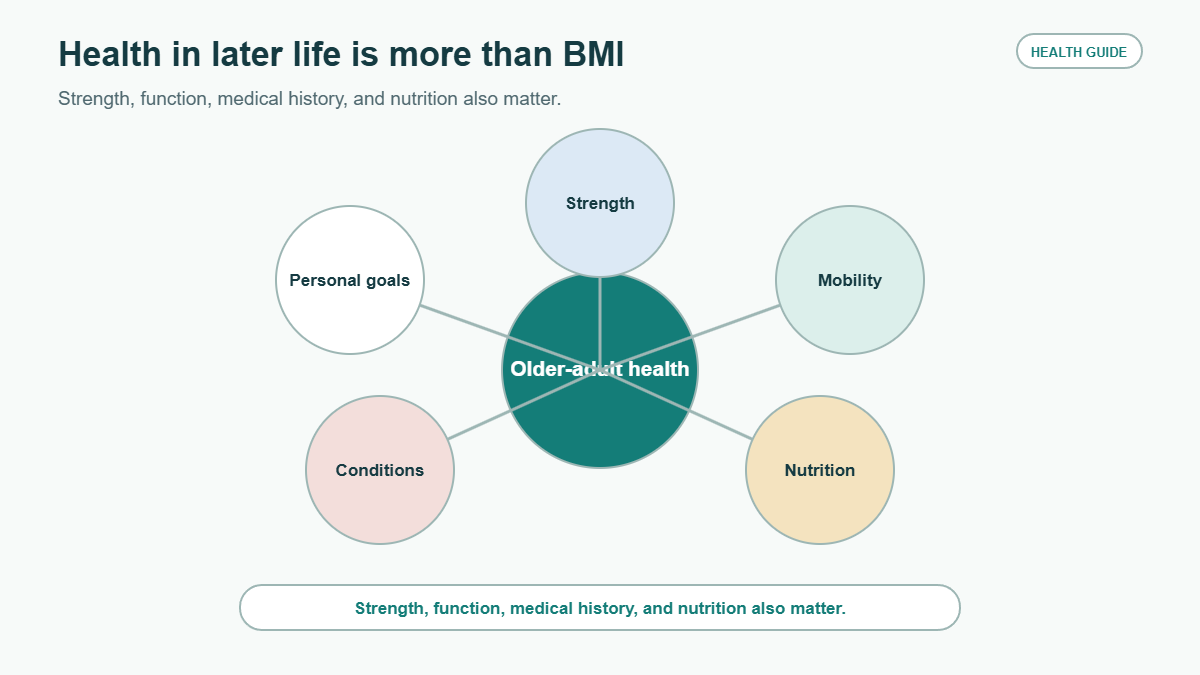
There is no single BMI number that can decide whether every older adult is healthy. A clinician may also consider strength, mobility, nutrition, medical history, and what matters to the person.
What standard adult BMI does and does not show
BMI is calculated from weight and height. The standard adult formula can be applied to adults, but it does not directly measure body fat or distinguish muscle from bone. The National Institute of Diabetes and Digestive and Kidney Diseases (NIDDK) notes that older adults may lose bone and muscle and gain body fat as they age; body composition can therefore change even when BMI does not. MedlinePlus also cautions that older people may need a different interpretation of BMI than younger adults.
These points are reasons for context, not a reason to ignore a result. A BMI chart cannot assess strength, mobility, nutrition, symptoms, medical conditions, or an individual’s health goals. A number alone also cannot explain whether a change is expected or needs attention.
What to discuss beyond the number
If you are reviewing BMI for yourself or a family member, consider the direction and pace of weight change, whether measurements were taken consistently, and what other health information may be relevant. A healthcare professional can decide whether additional assessment is appropriate. Bring questions about appetite, mobility, medicines, or unexplained weight changes to the appointment rather than trying to self-diagnose from a calculator.
Avoid using a generic “senior BMI” range as a personalized target. Different references may be designed for different purposes, and online calculators do not know a person’s medical history. The CDC describes BMI as one potential health indicator that should be considered with other factors. See our weight-management guide for general background, or browse our calculators for other estimates. Neither replaces advice from a qualified professional.
Short video: BMI in later adulthood
Frequently asked questions
Is there a special BMI range for everyone over 65?
A calculator cannot determine one personalized range for every older adult. References and clinical context differ, so ask a health professional how to interpret an individual result.
Can BMI stay the same while body composition changes?
Yes. NIDDK notes that body composition can change with age even when BMI does not. BMI alone cannot show muscle, bone, or fat distribution.
When should an older adult discuss a weight change?
If a change is unexpected, concerning, or accompanied by other symptoms, discuss it with a healthcare professional. A calculator cannot identify the cause.
Sources
Educational information only; not a diagnosis or personalized medical advice. Ask a qualified health professional about individual weight or health concerns.
