 Skip to content
An endurance training calculator may estimate pace zones, training time, or workload, but its output depends on the data and formula entered. A pace estimate from a recent test is different from one based on a general prediction. Treat calculator results as starting points that need adjustment for your experience, route, weather, health, and how you feel.
Build a balanced routine
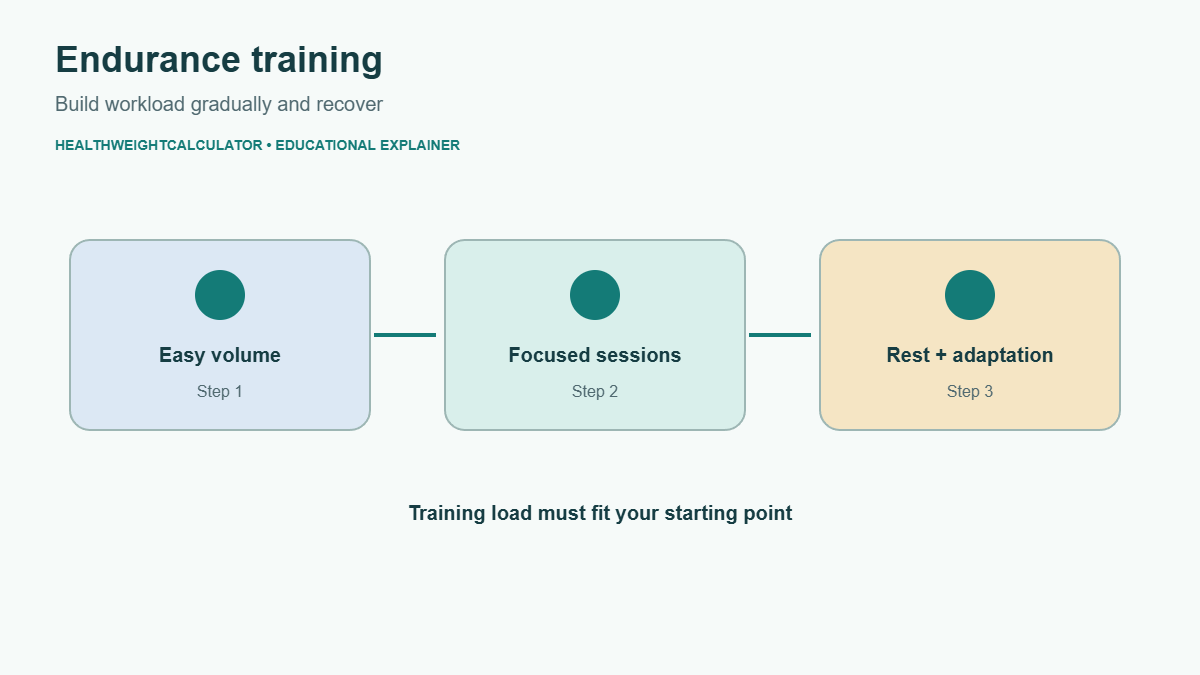
Endurance plans often combine easier sessions with selected harder efforts and rest or recovery days. The balance depends on the activity and training history. Increasing duration, distance, and intensity all at once can make a plan difficult to sustain. Gradual changes help you notice how your body responds and make it easier to reduce workload if something feels wrong.
Use calculations cautiously
Prediction formulas can differ, and a single workout may not represent current fitness. Heart-rate zones are estimates too; heat, stress, medication, and fatigue can affect heart rate. Do not treat a target pace or zone as a safety guarantee. Pay attention to symptoms and allow recovery when needed.
The CDC’s adult activity guidance recommends regular aerobic activity and muscle strengthening, while also emphasizing that activity can be adapted to ability. If you are new to exercise, have a chronic condition, or are returning after illness or injury, ask a healthcare professional about suitable activity. For energy estimates during exercise, read our workout calorie estimate guide.
Common questions
Can a calculator set my exact training pace?
No. It can estimate based on inputs, but conditions and individual response matter.
Should every session be hard?
No. Many programs balance effort with easier work and recovery.
When should I stop exercising?
Stop and seek appropriate advice for concerning symptoms such as chest pain, faintness, or unusual severe breathlessness.
Sources
Educational information only; not a personalized endurance program or medical clearance.
