 Skip to content
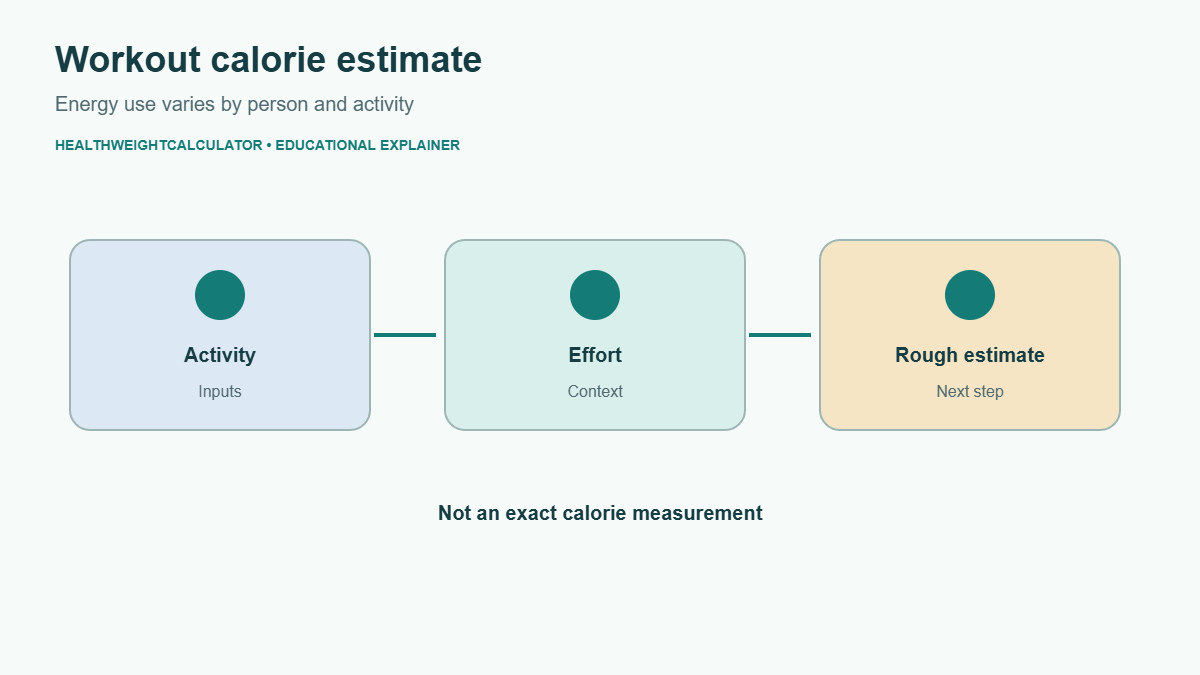
A workout calorie burn calculator estimates energy use; it does not measure it exactly. The result can depend on the activity selected, duration, intensity, body size, fitness, movement efficiency, and the equation or device used. Two tools may show different numbers for the same workout because their models and inputs differ.
What an estimate can—and cannot—show
A calculator can provide a rough illustration when you enter accurate information and understand its assumptions. It cannot determine precisely how many calories your body used or predict how much weight you will lose. Energy balance changes over time and is influenced by appetite, daily movement, recovery, and other factors—not just one exercise session.
Use activity data without overinterpreting it
If a wearable or calculator helps you notice activity patterns, treat the reading as a trend from that device rather than an exact calorie credit. Avoid using it to justify severe food restriction or to compensate for eating. If you have a medical condition, are recovering from an injury, or need a tailored activity plan, ask a healthcare professional for advice.
The CDC’s physical activity guidance for adults focuses on regular movement and health, not a required calorie-burn score. For general body-size estimates, see our basal metabolic rate article; resting energy estimates and exercise estimates are different concepts.
Common questions
Are smartwatch calorie readings exact?
No. Devices estimate energy use and may differ.
Can I eat back every calorie shown?
Do not treat the number as an exact measurement or dietary instruction.
What matters more than a single score?
Safe, sustainable activity habits and guidance appropriate to your health.
Sources
- CDC: Physical Activity Guidelines for Adults
- PubMed search: accuracy of wearable energy-expenditure estimates
Educational information only; not a measured calorie expenditure or nutrition prescription.

Pingback: Flexibility Progress Calculator: Track Range of Motion Safely
Pingback: Beginner Fitness Plan Calculator: Start with a Manageable Routine
Pingback: Endurance Training Calculator: Plan Workload with Recovery
Pingback: RPE Calculator for Workouts: Rate Exercise Effort
Pingback: Recovery Time Fitness Calculator: What Affects Recovery
Pingback: Bootcamp Calorie Burn Calculator: Why Class Estimates Differ
Pingback: Powerlifting Total Calculator: Add Your Three Main Lifts
Pingback: Daily Calorie Needs Calculator: Understand the Estimate
Pingback: Dance Fitness and Weight Loss: How to Interpret Calorie Estimates
Pingback: Cardio vs Weights Calculator: Compare Training Goals
Pingback: Weightlifting Calorie Needs Calculator: Why Estimates Vary
Pingback: Swimming Fitness Calculator | Health Weight Calculator
Pingback: Fitness Goal Timeline Calculator | Health Weight Calculator
Pingback: Exercise Intensity Calculator | Health Weight Calculator
Pingback: Home Workout Calorie Calculator | Health Weight Calculator
Pingback: Cycling Calories Burned Calculator | Health Weight Calculator
Pingback: Yoga Calorie Burn Calculator | Health Weight Calculator
Pingback: Crossfit Wod Calorie Calculator | Health Weight Calculator
Pingback: Fitness Age Calculator Test | Health Weight Calculator
Pingback: Vo2 Max Calculator Fitness | Health Weight Calculator
Pingback: Advanced Hiit Calorie Calculator | Health Weight Calculator
Pingback: Best Exercises for Weight Loss at Home: Choose a Safe Mix
Pingback: How Many Steps Per Day to Lose Weight? Start with Your Baseline
Pingback: HIIT for Weight Loss: A Beginner Guide Without All-Out Pressure
Pingback: Walking for Weight Loss: How Much Is Enough for You?
Pingback: BMR Calculator: Basal Metabolic Rate and Input Checks