 Skip to content
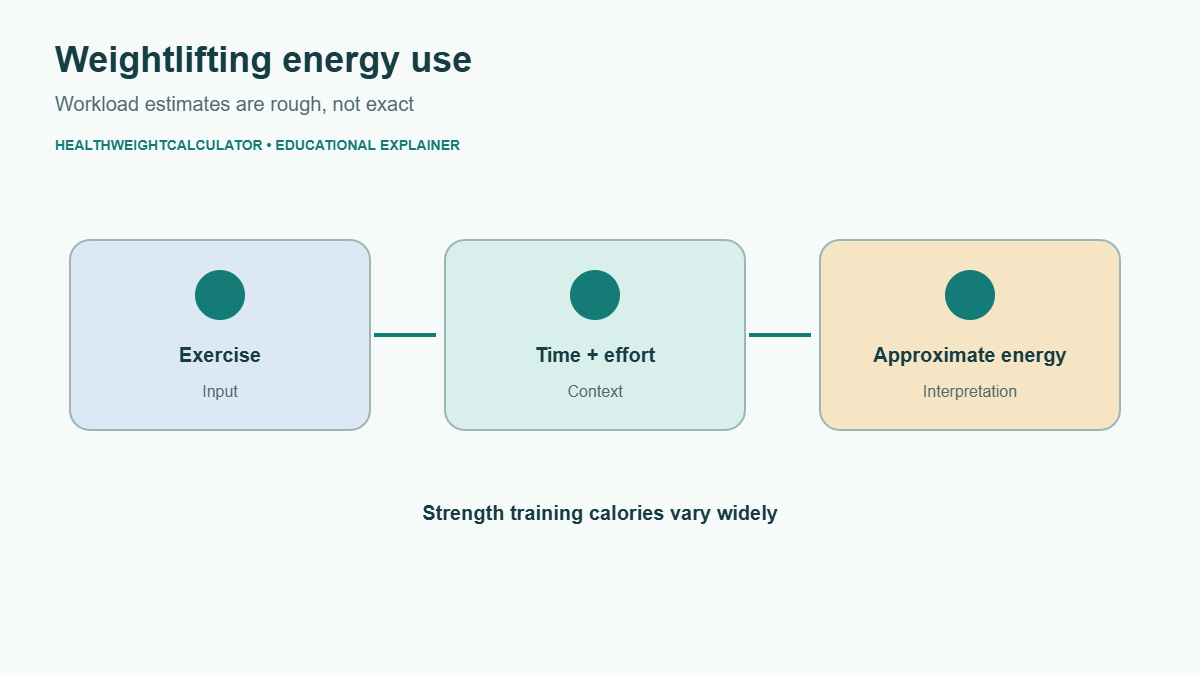
A weightlifting calorie needs calculator can estimate energy used during a session, but it cannot measure an exact number for your body. The result depends on the exercise, duration, rest between sets, effort, body size, and the formula or wearable used. A workout with long rests and heavy sets may be treated differently from continuous circuit training, even if both take the same time.
Why strength-training estimates are uncertain
Many calculators use broad activity categories or average energy-cost values. They may not capture how much time you actually lift, how long you rest, the load, your movement efficiency, or changes in heart rate. Wearables also estimate energy use using proprietary algorithms. Different tools can therefore report different values for the same workout.
Do not use the result as a food allowance
It is usually more useful to view a calorie estimate as a rough way to compare similar sessions on the same device than as a precise “credit” to eat back. Energy balance and body weight change over time and involve more than one workout. Do not use a calculator to justify severe food restriction or to make a medical nutrition decision.
For general movement, the CDC recommends adults include aerobic activity and muscle-strengthening activity in their weekly routine, adapted to their abilities. If you have health concerns or need a personal activity plan, ask a healthcare professional. See our workout calorie-burn guide for more on the limits of exercise-energy estimates.
Common questions
Are lifting calories exact?
No. A calculator or wearable produces an estimate based on inputs and assumptions.
Can I compare two devices?
Not as though they use the same method; algorithms and definitions can differ.
Should I eat back the calories shown?
Do not treat the estimate as a precise dietary instruction.
Sources
Educational information only; not a measured calorie expenditure or nutrition prescription.
