 Skip to content
Basal metabolic rate, or BMR, describes energy used to support basic body functions under standardized resting conditions. A BMR calculator estimates it from inputs such as age, height, weight, and a category required by its equation. It is not a test of thyroid function, a diagnosis of a slow metabolism, or your complete daily energy requirement.
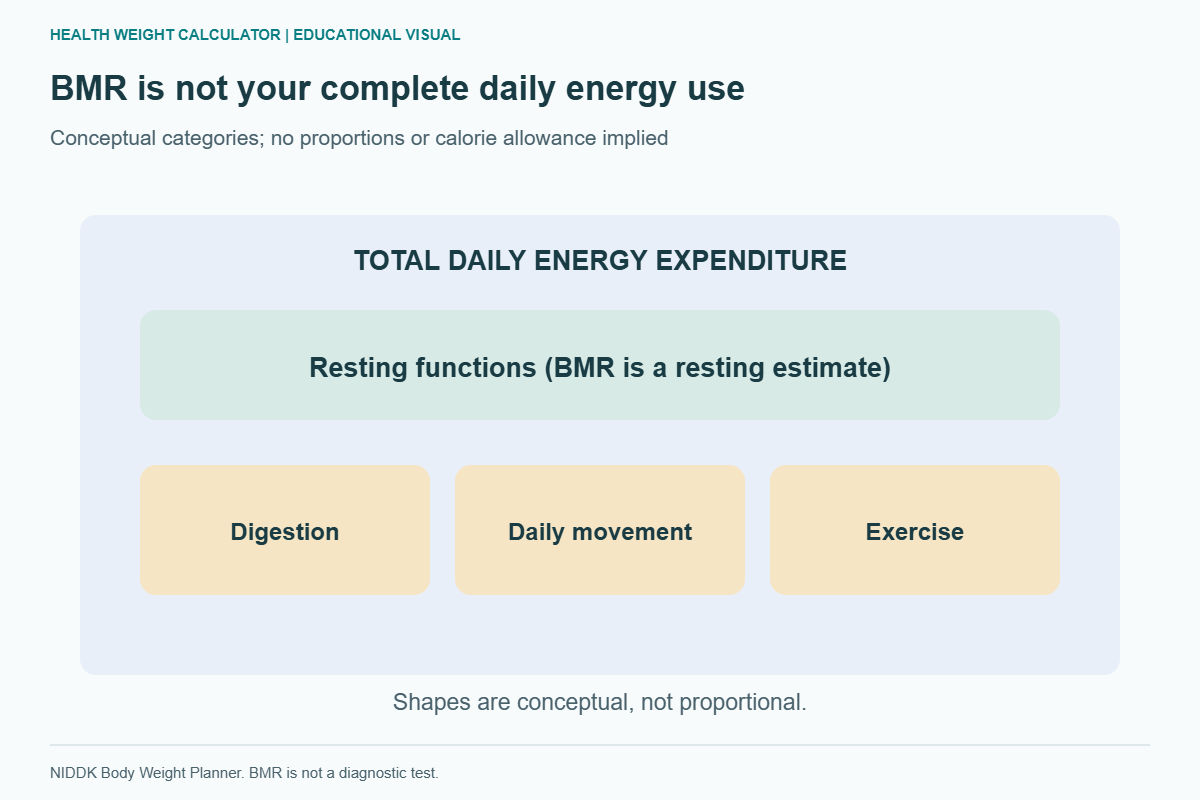
BMR, resting metabolic rate, and daily expenditure
BMR and resting metabolic rate are related concepts measured under different conditions, although websites sometimes use the terms loosely. Total daily energy expenditure includes resting needs plus digestion, daily movement, and exercise. A tool should explain which quantity it estimates.
Eating a number equal to calculated BMR is not automatically an appropriate weight-management plan. It leaves out the question of total needs, nutritional adequacy, and individual health. Do not use the estimate as an eating ceiling.
Why calculator answers differ
Different equations can produce different estimates from the same measurements. Some use a body-composition input; others do not. Unit conversions, rounding, age ranges, and the category selected can also affect the answer. A more precise-looking display does not necessarily mean a more accurate individual estimate.
If an equation uses sex-based categories, read the method’s explanation rather than assuming it captures every aspect of a person’s physiology. Generic equations may not reflect all circumstances, and individual assessment can be more useful when the result does not fit the situation.
Check your inputs before interpreting a result
- Enter current measured height and weight where appropriate.
- Confirm whether the form expects kilograms or pounds and centimetres or inches.
- Distinguish total inches from feet-and-inches notation.
- Check whether the output is resting energy or an activity-adjusted total.
- Avoid interpreting one low estimate as a medical finding.
When to seek more than an equation
Unexplained weight changes, persistent fatigue, new symptoms, or concerns about medication deserve a conversation with a healthcare professional. A calculator cannot examine you, review laboratory results, or determine why a change occurred.
The NIDDK Body Weight Planner uses starting information and activity to estimate weight-related energy plans over time. It is not intended for people under 18 or for pregnant or breastfeeding users, and it does not replace medical advice. Its official page links to a how-to video for understanding the tool rather than treating its output as a diagnosis.
Frequently asked questions
Can exercise burn more than the BMR number?
These are different quantities. Daily energy use includes resting and activity-related components; a workout reading alone does not describe the whole day.
Does a low BMR estimate mean my metabolism is broken?
No. Equations are estimates, not diagnostic tests. Our metabolic-age guide explains another commonly misunderstood device output.
How do I avoid counting exercise twice?
Read whether your daily-needs estimate already includes activity. Our workout-calorie guide explains why exercise estimates are approximate.
Short visual recap
Sources
General adult education, not a metabolic test or daily calorie prescription.
