 Skip to content
An intermittent fasting weight loss calculator can describe an eating window, but the window alone cannot predict weight loss. Meal timing, total intake, food quality, health, medicines, and how a routine fits your life all matter. Fasting is not necessary for weight management.
What a timing calculation can show
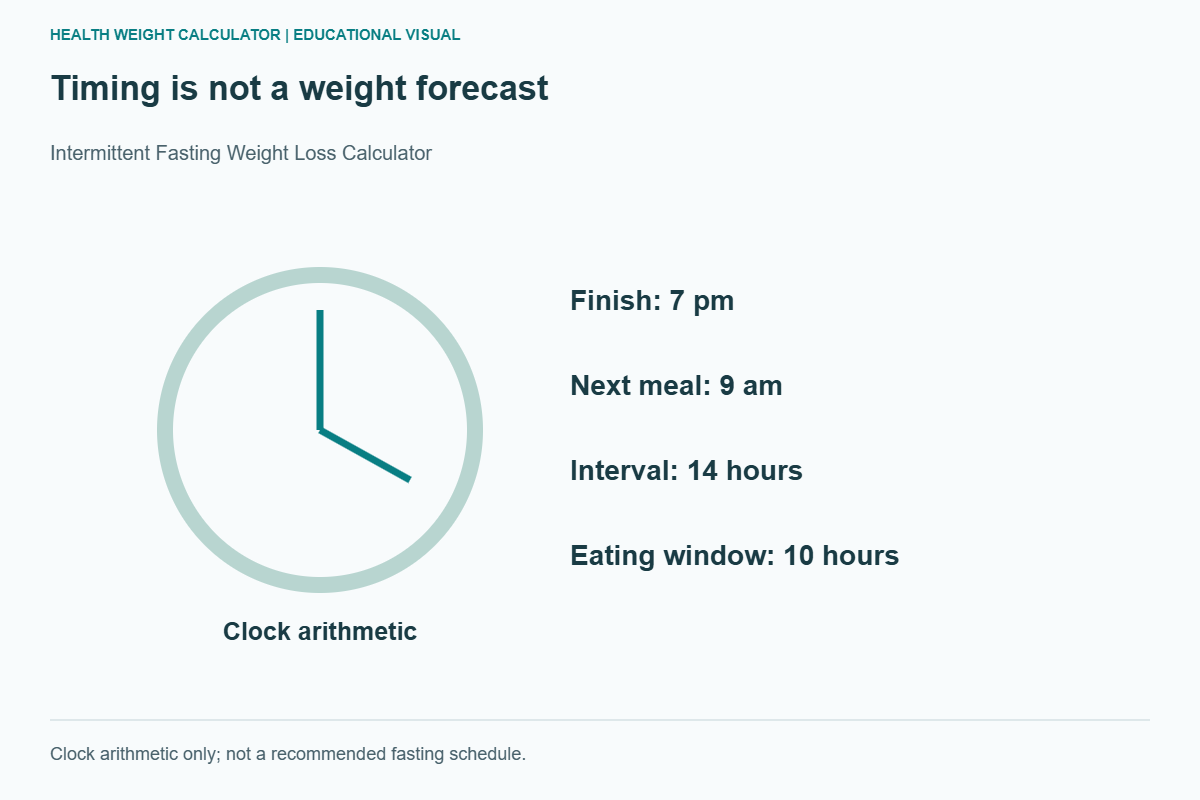
If a person finishes eating at 7 pm and next eats at 9 am, the interval is 14 hours and the remaining daily eating window is 10 hours. This is clock arithmetic, not a recommended schedule or a statement about calories consumed.
Two people following that same window can eat very different amounts and have different health needs. A calculator that converts fasting hours directly into pounds lost is leaving out essential information.
Consider the practical trade-offs
Some adults prefer a consistent meal schedule because it reduces unplanned eating. Others become excessively hungry, struggle with family meals, or find the approach encourages restriction followed by overeating. A regular non-fasting meal pattern is a valid alternative.
Do not compensate for an eating window by skipping adequate nutrition. Protein foods, produce, fibre-containing staples, fluids, and enough overall food still matter. Exercise and sleep do not stop being relevant because meal timing changes.
When to get advice first
Fasting can be inappropriate during pregnancy or breastfeeding, for children and teenagers, and for people with eating-disorder concerns. Diabetes treatments and other medicines may require food timing or create a low-blood-sugar risk. Discuss changes with the prescribing clinician rather than adjusting medication yourself.
Questions about fasting calculators
Does a longer fast mean faster fat loss?
No reliable personal conversion exists. Extending restriction can create problems without delivering a predictable benefit.
What evidence is linked below?
The NIH News in Health article is background published in 2019, not a claim that one fasting schedule is the latest or best treatment. Individual decisions need current clinical context.
Sources and further reading
- NIDDK: Body Weight Planner and its limitations
- CDC: Losing Weight
- NIDDK: Eating and Physical Activity
- NIH News in Health: To Fast or Not to Fast? (2019 background)
Related reading: daily calorie needs and estimate limitations. Educational information, not a personalized diet prescription.
Short visual recap
Visual recap transcript
An intermittent fasting weight loss calculator can describe an eating window, but the window alone cannot predict weight loss. Meal timing, total intake, food quality, health, medicines, and how a routine fits your life all matter. Fasting is not necessary for weight management.
Timing is not a weight forecast. Finish: 7 pm; Next meal: 9 am; Interval: 14 hours; Eating window: 10 hours. Clock arithmetic only; not a recommended fasting schedule.
No reliable personal conversion exists. Extending restriction can create problems without delivering a predictable benefit.
