 Skip to content
An overweight BMI is an adult screening category from 25 to less than 30. It can prompt a closer look at health risks, but it does not diagnose a disease or predict an individual’s future. The most useful next step is to assess the whole picture rather than treating a chart label as a personal failure.
What the association means
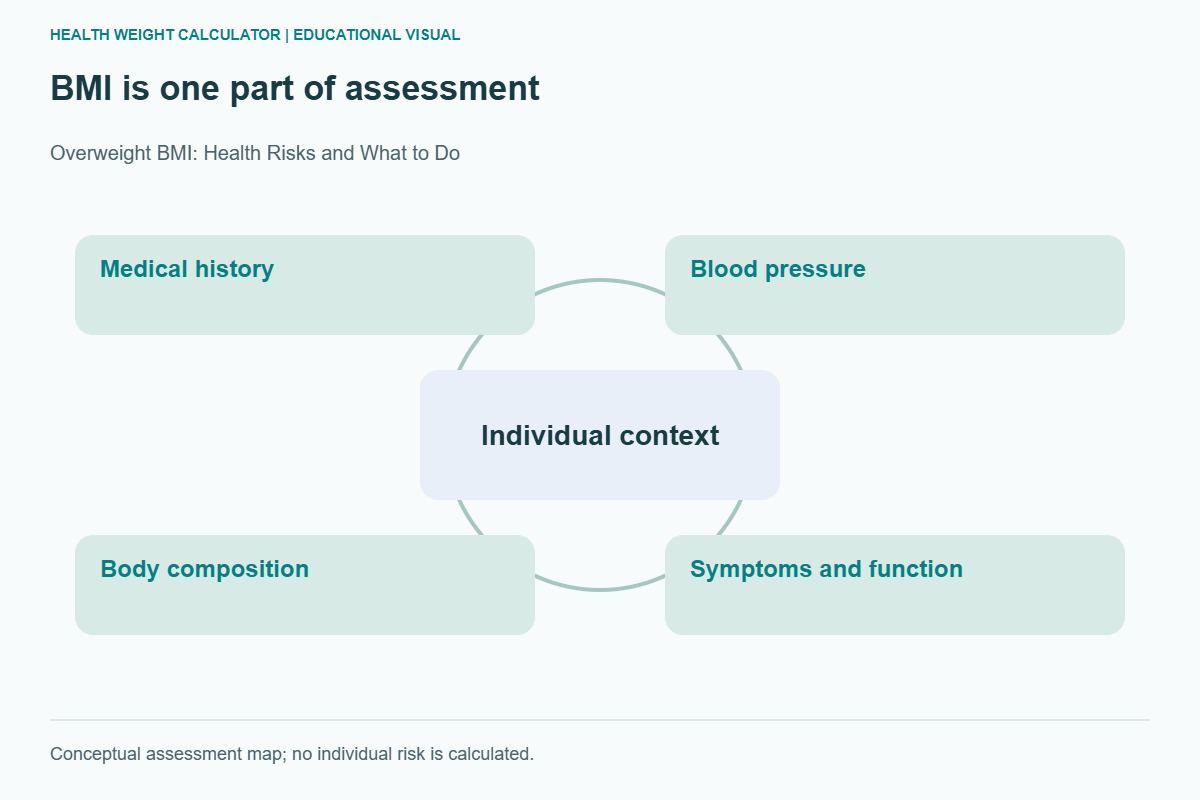
At the population level, excess body fat is associated with conditions including type 2 diabetes and cardiovascular disease. BMI is an imperfect proxy for body fat, however. Fat distribution, family history, blood pressure, activity, smoking, sleep, and existing illness also influence risk.
A muscular adult and an adult with low muscle mass can have the same BMI. Someone below the overweight boundary can still have cardiometabolic risk. That is why a risk assessment should not stop when the calculator finishes.
Prepare for a useful appointment
- Bring a weight history and mention rapid or unexplained changes.
- Ask whether waist measurement, blood pressure checks, or relevant blood tests would help.
- Review medicines that may affect appetite or weight; do not stop them independently.
- Discuss goals in terms of health, function, and manageable habits.
Start with practical changes, not punishment
Regular meals, accessible nutritious foods, suitable activity, and consistent sleep routines can support health. A dietitian can help adapt a plan for budget, culture, allergies, or medical conditions. If weight reduction is recommended, the plan should be adequate and sustainable, not a compulsory crash diet.
Follow-up matters. Improvement in blood pressure, stamina, or glucose management may occur even when the BMI category does not change. Conversely, persistent fatigue, dizziness, or unintended loss needs attention regardless of the category.
Common questions
Is BMI 25 much worse than 24.9?
No abrupt biological switch occurs at the boundary. Categories simplify a continuous measurement.
Do I need weight-loss medicine?
BMI alone cannot answer that. Treatment decisions depend on individual indications, risks, medical history, and local guidance.
Sources and further reading
Related reading: adult BMI chart and interpretation. Educational information, not a diagnosis or a personalized treatment plan.
Short visual recap
Visual recap transcript
An overweight BMI is an adult screening category from 25 to less than 30. It can prompt a closer look at health risks, but it does not diagnose a disease or predict an individual’s future. The most useful next step is to assess the whole picture rather than treating a chart label as a personal failure.
BMI is one part of assessment. Medical history; Blood pressure; Body composition; Symptoms and function. Conceptual assessment map; no individual risk is calculated.
No abrupt biological switch occurs at the boundary. Categories simplify a continuous measurement.
