 Skip to content
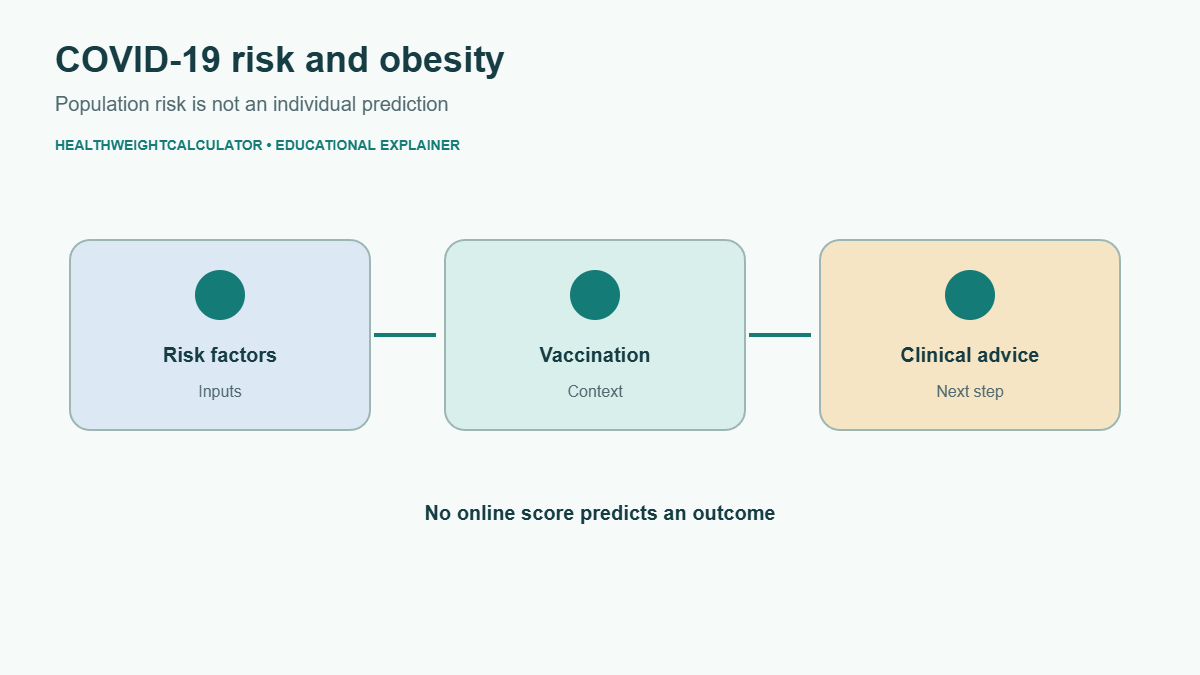
A COVID-19 risk obesity calculator cannot predict whether a specific person will become infected, become severely ill, or need hospital care. Public-health guidance identifies factors associated with greater risk, but group-level risk information is not a personalized forecast. An online score cannot account for every relevant health or exposure detail.
Risk depends on more than body size
COVID-19 outcomes can be affected by age, underlying conditions, immune status, vaccination history, access to treatment, and other factors. The CDC lists obesity among conditions associated with increased risk of severe illness, but that does not mean every person with obesity will have a severe outcome or that people without it are risk-free.
Use current health guidance
Follow current public-health recommendations and seek advice from a healthcare professional about vaccination, prevention, testing, or treatment—especially if you are at higher risk or become ill. Do not use a weight calculator to decide whether to seek care or to stop preventive measures.
For current information, review the CDC page on risk factors for severe COVID-19. Recommendations can change, so rely on updated official guidance rather than an old calculator. Our immune health and weight article also discusses why weight alone cannot define an individual’s outcome.
Common questions
Does obesity mean I will get severe COVID-19?
No. It is a risk factor, not a prediction of what will happen to one person.
Can a calculator decide if I need treatment?
No. Follow current guidance and contact a healthcare professional for advice.
Where can I find updated recommendations?
Check official public-health sources such as the CDC and your local health authority.
Sources
Educational information only; not a personal risk prediction or medical advice.
