 Skip to content
A muscle mass percentage calculator may appear to turn body weight into a simple number, but muscle is not directly measured by most home scales. Many devices estimate body composition using electrical impedance and an algorithm. The result is a model-based estimate that can shift with the device, measurement conditions, and assumptions—not a direct scan of all muscle tissue.
Muscle mass is not one universal number
People use “muscle mass” to refer to different things, such as skeletal muscle, lean mass, or fat-free mass. Those terms are not interchangeable. A calculator may not clearly state which one it estimates, what equation it uses, or how the number was validated. Without that information, comparing two results—or a result with an online chart—can be misleading.
How to interpret a reading
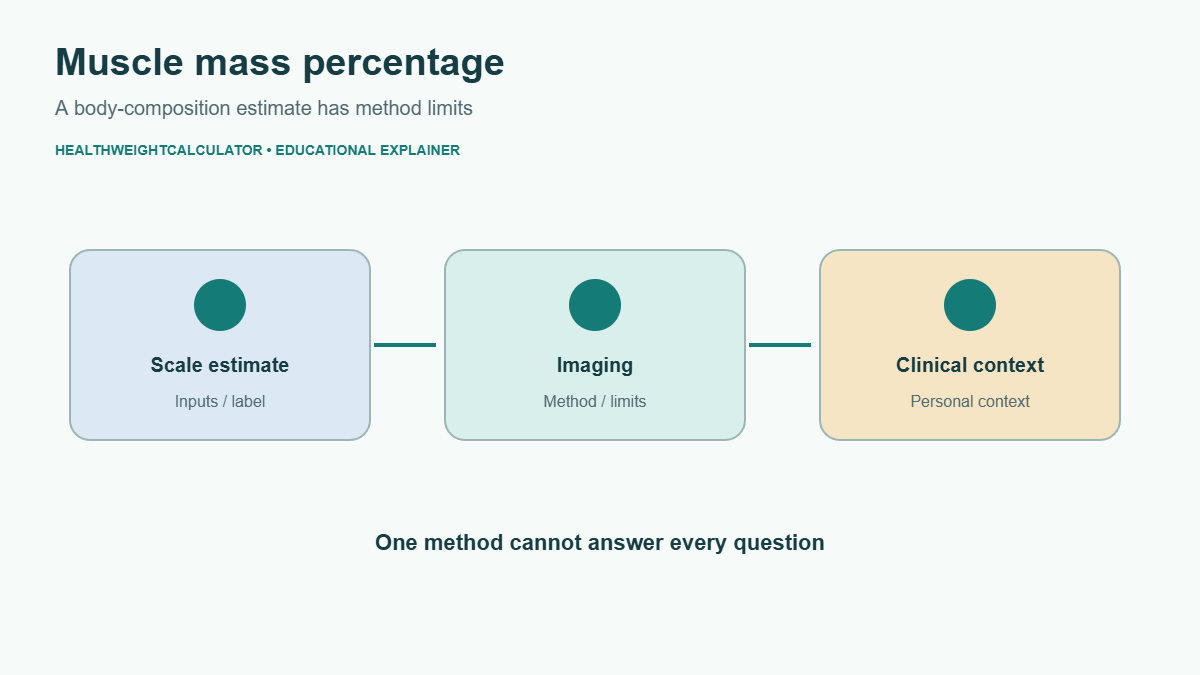
If you use a consumer device, follow its instructions and measure under similar conditions each time. Treat small changes cautiously; hydration, recent activity, meals, and device algorithms may affect readings. A single percentage should not be used to diagnose a condition, assess athletic performance, or make a nutrition or treatment plan.
Clinical and research settings may use methods such as DXA or imaging to estimate body composition, each with its own purpose and limitations. Even then, results need interpretation in context. The CDC’s discussion of BMI is a useful reminder that common body-size measures do not distinguish all body tissues; muscle estimates likewise require knowing what a method actually measures.
If you are concerned about weakness, unexpected weight change, nutrition, or physical function, discuss the concern with a healthcare professional rather than chasing a target percentage. You may also want to read our ideal body-weight formula guide for another example of why estimated numbers are not individualized health assessments.
Common questions
Does a bathroom scale directly measure muscle?
Usually not. Many scales estimate body composition using an algorithm and electrical impedance.
Can I compare readings from different brands?
Not reliably without knowing whether the devices use comparable methods and definitions.
Should I set a goal from the calculator?
Do not use one estimate as a medical target. Discuss personal goals with a qualified professional.
Sources
- CDC: About BMI and body-composition limitations
- PubMed search: reviews of body-composition measurement methods
Educational information only; a calculator cannot diagnose muscle loss or other health conditions.

Pingback: Body Adiposity Index Calculator: Formula and Limitations
Pingback: Fat-Free Mass Index Calculator: What the Number Measures
Pingback: Daily Protein Intake Calculator: Estimate with Context
Pingback: High-Protein Foods for Weight Loss: Build Practical Meals
Pingback: Cardio vs Strength Training for Weight Loss: Why Combine Them?