 Skip to content
The best first step in weight management is a change you can actually repeat. You do not need a new app, a cupboard of supplements, or a perfect meal plan. Decide what you want to improve, notice what gets in the way, and choose one or two practical habits before adding more.
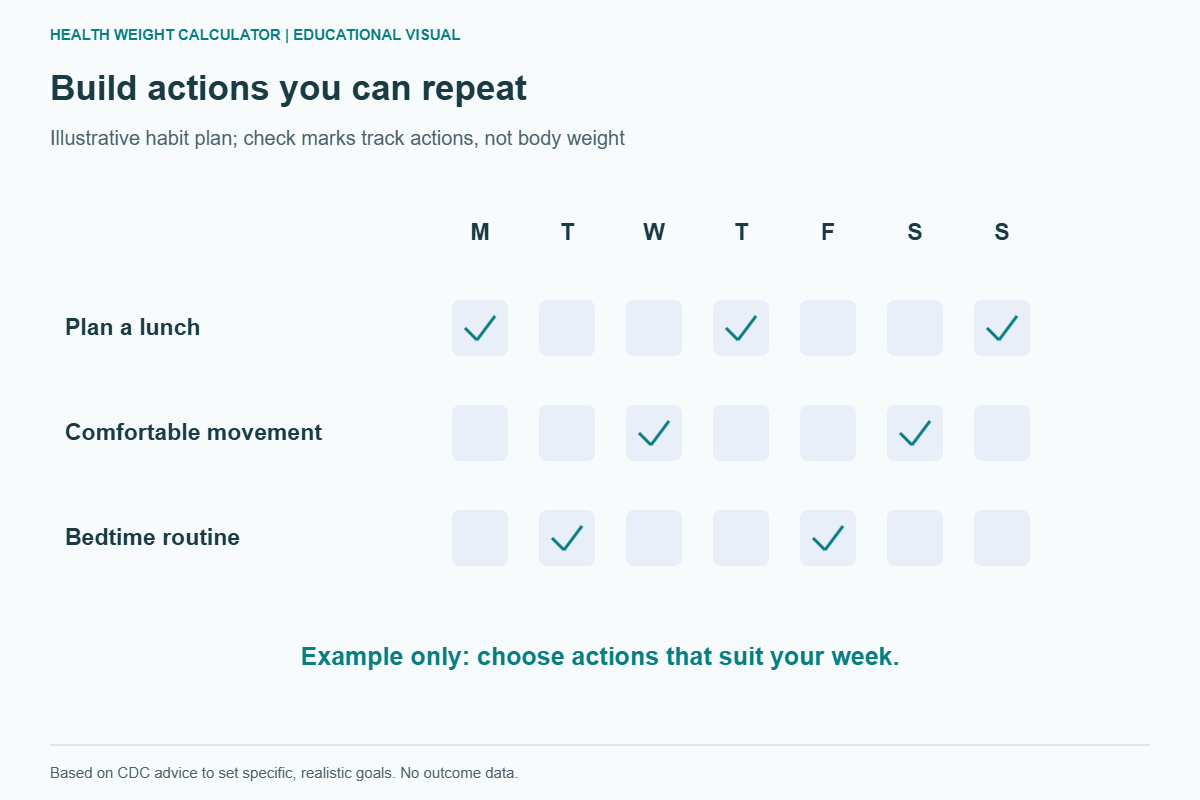
Decide whether the goal is loss, maintenance, or better health
Weight management does not always mean weight loss. For some people, preventing further gain or establishing regular meals is a useful starting point. For others, medical assessment or support with eating concerns should come first. If you are unsure, discuss your situation with a clinician rather than choosing a target from social media.
CDC guidance emphasizes specific, realistic goals, support, and reviewing progress. Its examples focus on actions such as a short walk or including vegetables with dinner. These are easier to act on than an instruction to become a completely different person by next month.
Look at an ordinary week
For a few days, note meals, drinks, movement, sleep, and situations that make routines difficult. You do not have to calculate every calorie. You might discover that the main obstacle is an unpredictable work break, a long commute, limited food storage, or pain that makes walking difficult.
Use that information to change the setup. Keep a shelf-stable lunch option at work, choose a comfortable form of movement, or plan a meal for the evening you usually get home late. A barrier is a problem to solve, not proof that you lack discipline.
Choose two concrete actions
- A food action: Add a vegetable to dinner, prepare a lunch you enjoy, or replace a sugary drink with an alternative you like.
- A movement action: Take a short walk after lunch or practise an accessible strength exercise on two planned days.
Make each action specific enough to know whether it happened. The CDC’s general adult activity recommendation is at least 150 minutes of moderate-intensity activity weekly plus two strengthening days, but you can start below that level and build up. Some activity is better than none.
Measure progress without making the scale the whole story
Useful signs include being less out of breath, having a regular lunch, sleeping more consistently, or lifting a familiar load more comfortably. If you track weight, use similar conditions and look at trends rather than reacting to one reading. You do not need to weigh yourself if it harms your relationship with food or your body.
Our BMR explanation can help you understand an energy estimate, but it does not prescribe a daily food allowance. Our waist-to-height guide explains the limitations of another screening number.
Plan for an imperfect week
Keep a minimum version of your routine: a convenient meal, a few minutes of comfortable movement, or a planned bedtime. If something does not happen, resume at the next opportunity rather than trying to compensate through fasting or excessive exercise. Ask a friend, dietitian, or healthcare team for help when you need it.
Frequently asked questions
Do I have to count calories?
No. Some people find tracking helpful; others benefit from meal routines and practical changes. Choose an approach that supports adequate nutrition and wellbeing.
How many habits should I change at once?
CDC suggests focusing on two or three realistic goals. Starting smaller is reasonable if your circumstances are demanding.
Short visual recap
Sources
General adult education; seek individualized advice for pregnancy, eating disorders, medical conditions, or unexplained weight changes.
