 Skip to content
Lowering BMI means changing weight relative to height, but whether that is useful depends on your health and circumstances. For adults whose clinician recommends weight reduction, practical changes to eating, activity, sleep, and follow-up are more useful than trying to force a fast change on a chart.
First decide whether weight loss is appropriate
A high BMI is a screening result. It cannot distinguish muscle from fat, and a lower result is not automatically better. Pregnancy, adolescence, frailty, unexplained weight loss, or a history of disordered eating call for a different conversation. Do not begin a restrictive plan solely because an online number looks high.
Choose changes you can repeat
Begin with one specific obstacle. If lunch is regularly skipped and evenings become chaotic, plan an accessible lunch rather than adding another food ban. If sugary drinks are a large part of intake, try an acceptable unsweetened alternative. Keep meals adequate and varied, including protein foods, produce, and fibre-containing staples where suitable.
Build movement from your current ability. Walking, swimming, seated activity, and resistance exercises can all be adapted. CDC recommends a combination of aerobic and muscle-strengthening activity for adults, but someone currently inactive can start below the full guideline amount.
Track a trend, not a verdict
For an adult at 1.70 m, a change from 80 to 78 kg changes BMI from about 27.68 to 26.99. That arithmetic says nothing about the time required or whether the change is appropriate. Record relevant health measures, energy, strength, and comfort alongside any weight trend.
Review the plan if it causes persistent hunger, dizziness, declining function, or distress. Medicines and medical conditions can affect weight; ask for assessment rather than assuming a plateau means a lack of effort.
Questions people ask
Can exercise lower BMI without dieting?
Activity can improve health even when BMI changes little. Weight response varies, so it should not be judged only by the scale.
Should I aim for the bottom of the healthy range?
No. There is no universal benefit to choosing the lowest boundary. An appropriate goal is individual.
Sources and further reading
Related reading: adult BMI chart and interpretation. Educational information, not a diagnosis or a personalized treatment plan.
Short visual recap
Visual recap transcript
Lowering BMI means changing weight relative to height, but whether that is useful depends on your health and circumstances. For adults whose clinician recommends weight reduction, practical changes to eating, activity, sleep, and follow-up are more useful than trying to force a fast change on a chart.
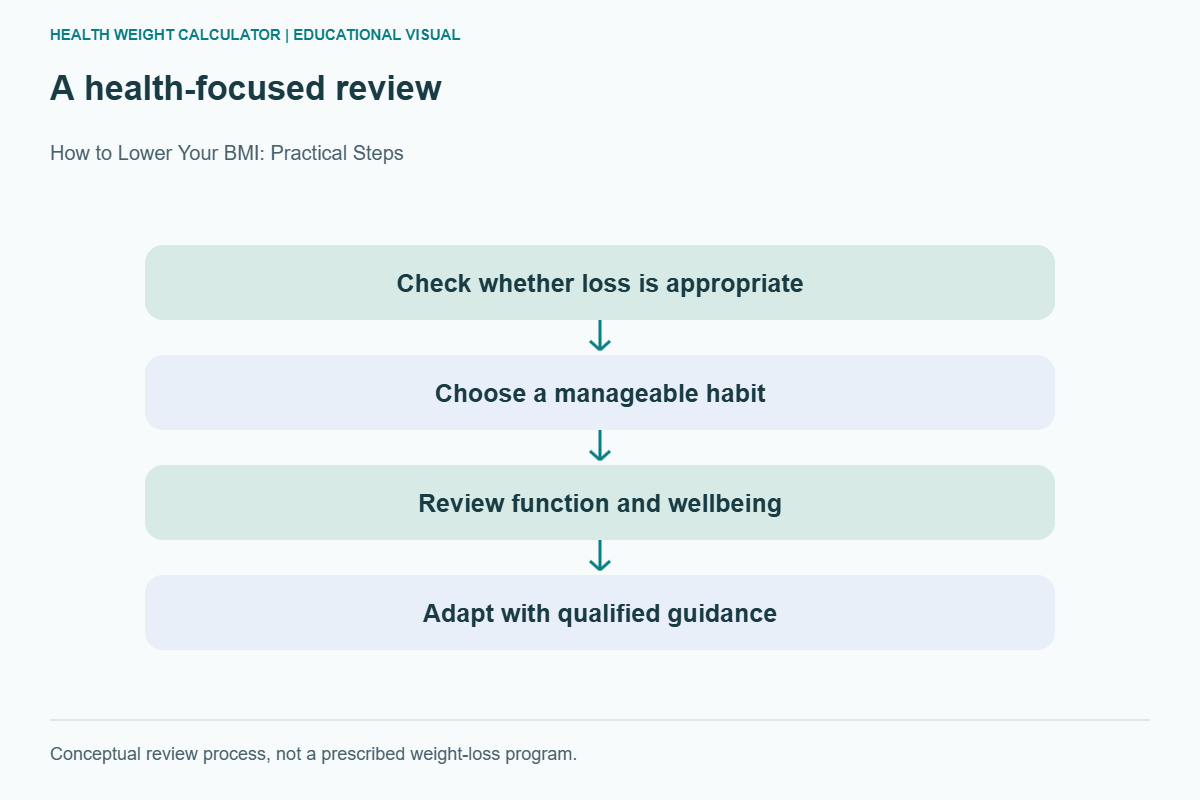
A health-focused review. Check whether loss is appropriate then Choose a manageable habit then Review function and wellbeing then Adapt with qualified guidance. Conceptual review process, not a prescribed weight-loss program.
Activity can improve health even when BMI changes little. Weight response varies, so it should not be judged only by the scale.
